
Victorian style interior decorating brings timeless elegance and rich character into any home. Unlike generic period pastiche, authentic Victorian interior design balances ornate detailing with livable comfort, something homeowners often struggle with when attempting the look themselves. This guide walks you through the core principles, practical selection of colors, furniture, and lighting that define Victorian aesthetics, then shows you how to blend those elements with modern convenience. Whether you’re refreshing a single room or planning a whole-home renovation, understanding what makes Victorian design work helps you avoid overdoing the velvet rope and create spaces that feel genuinely inviting rather than museum-like.
Table of Contents
ToggleKey Takeaways
- Victorian style interior decorating balances ornate detailing with livable comfort by combining rich, saturated jewel tones (burgundy, forest green, navy) with neutral spaces that prevent rooms from feeling cluttered or museum-like.
- Authentic Victorian furniture selection emphasizes quality solid wood pieces with turned legs and genuine upholstery fabrics, arranged in conversational layouts with symmetrical or asymmetrical balance rather than TV-centered modern arrangements.
- Victorian lighting requires warm color temperatures (2700K incandescent or warm LED), brass or bronze fixtures with fabric shades, and layered sources including chandeliers, wall sconces, and table lamps to authentically recreate the period’s candlelit ambiance.
- Successful Victorian interiors blend period aesthetics with modern comfort by hiding contemporary elements (TVs in fitted cabinetry, modern HVAC), using quality area rugs and upholstered seating for warmth, and incorporating one or two modern pieces to keep spaces feeling current.
- Start implementing Victorian interior design with a single room, choosing one accent wall in deep color or period wallpaper, adding a quality centerpiece furniture piece, and layering multiple light sources before committing to whole-home renovation.
Understanding Victorian Design Principles and Historical Context
The <a href="https://www.architecturaldigest.com/story/victorian-interior-design-style-guide” target=”_blank” rel=”noopener nofollow”>Victorian era (1837–1901) celebrated craftsmanship, layered textures, and abundance, but not chaos. Victorian interior design reflects an era when homeowners could display wealth through ornamentation, yet the underlying structure remained symmetrical and purposeful. The style emerged from industrial advances that made mass-produced ornamental trim, wallpaper, and cast-iron fixtures affordable to the middle class. Understanding this historical context prevents you from making the mistake of piling on every ornate piece you find. Victorian spaces were intentionally curated, with each pattern, color, and object chosen to create visual interest within a defined framework. Pattern mixing was encouraged, but always within a cohesive color story. This discipline, knowing when to be bold and when to restrain, separates authentic Victorian interior design from cluttered imitation. Most homeowners underestimate how much white, cream, or soft neutral space surrounds the ornamental elements in period homes. The ornate wallpaper, heavy drapery, and detailed molding work because they contrast against simpler wall areas and unfussy ceiling lines.
Essential Color Palettes and Wall Treatments
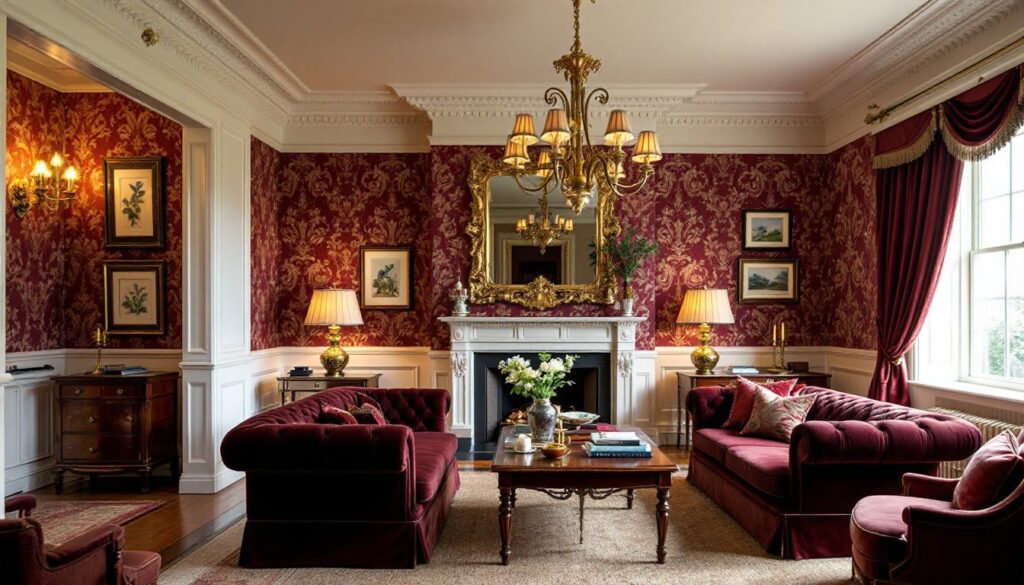
Victorian color palettes lean toward deep, saturated tones paired with lighter neutrals. Common period hues include burgundy, forest green, navy, terracotta, sage, and warm creams. The key is understanding saturation: Victorian colors are rich but not neon. Pair a deep jewel-tone accent wall with cream or pale gray trim and ceiling, and the space immediately reads period-appropriate. Paint itself, flat, eggshell, or satin finish, matters less than the hue choice, though period research suggests they used oil-based paints with lower sheen than modern latex. For walls, consider wallpaper on a feature wall: damask, floral, or geometric Victorian-era patterns work beautifully. If full walls feel too heavy, apply wallpaper from chair rail height upward, then paint the lower wall a coordinating solid color, this dado treatment is historically accurate and breaks up large rooms. Primer is essential before wallpaper: modern drywall primer prevents adhesive bleed-through and ensures clean removal later. When selecting paint colors, order sample pots and brush them on the actual wall in multiple lighting conditions. What reads burgundy at the hardware store might look mauve or brown in your north-facing bedroom.
Furniture Selection and Layout for Period Authenticity
Victorian furniture is substantial, often with turned legs, velvet upholstery, and carved details. When selecting pieces, choose quality secondhand or reproduction furniture over flimsy new pieces with a “Victorian-inspired” label. Look for solid wood frames (walnut, mahogany, or oak), genuine upholstery fabrics (velvet, damask, heavy linen), and genuine ornamental hardware. A single well-chosen settee or parlor chair anchors the room better than multiple mediocre pieces. Furniture layout in Victorian rooms emphasized conversation: pieces faced each other across a central table, rather than all pointing toward entertainment. Don’t default to the modern TV-centered arrangement: instead, float furniture to create intimate seating groups. This approach actually works well in modern homes and reduces the “museum” feel. Consider capturing timeless elegance in your home by mixing periods deliberately. A Victorian settee paired with a modern side table or contemporary artwork feels fresher than wall-to-wall period matching. Symmetry was important in Victorian design, but asymmetrical balance, a heavy bookcase on one side, a pair of smaller tables on the other, also appeared in period homes and translates well to modern living. Pay attention to scale: oversized Victorian furniture overwhelms small rooms. Measure doorways and consider how pieces will move through your home before purchasing.
Lighting Fixtures and Decorative Accents
Victorian lighting centered on gas and oil lamps, later transitioning to electric fixtures that mimicked candlelight and ornate forms. Install brass or bronze chandeliers with fabric shades, wall sconces with curved arms, or table lamps with weighted bases and pleated shades. The warmth of incandescent or warm LED bulbs (2700K color temperature) is essential, cool white light destroys the period mood instantly. Brass and oil-rubbed bronze read more authentic than shiny chrome or glass. For decorative accents, layering is crucial. Include a mix of: ornate mirrors (often with gilt or carved frames), heavy fabric window treatments (velvet drapes with tasseled tie-backs), artwork in period-appropriate frames, collections displayed on shelves or side tables, and decorative objects like brass candlesticks, porcelain figurines, or leather-bound books. Don’t shy away from maximalism, visible book spines, framed botanical prints stacked salon-style, or a collection of vintage bottles on a mantelpiece all reinforce the period aesthetic. Window treatments especially deserve attention: Victorian windows featured multiple layers (sheer curtains for privacy, heavy outer drapes for warmth and light control, and often a valance or cornice). Modern thermal-lined velvet panels over a sheer layer achieve this look while maintaining contemporary function. Look to architectural design trends for inspiration on high-end period treatments.
Blending Victorian Elements With Modern Comfort
The most successful Victorian interiors today aren’t pure reproductions, they’re hybrids that respect period aesthetics while acknowledging modern needs. Hide modern elements smartly: tuck televisions into fitted cabinetry, use period-style picture rails to hang and rehang artwork without wall damage, and choose air-vents and light switches in finishes matching your hardware (brass covers on brass-fixture rooms, oil-rubbed bronze in darker schemes). Climate control becomes essential in Victorian-inspired homes with heavy drapes and closed-off spaces: ensure HVAC pathways aren’t blocked by furniture or treatment layers. Flooring can be a bridge between periods. Original hardwood (oak, walnut, or pine) aligns with Victorian homes: modern wide-plank engineered hardwood mimics period aesthetics without the cost and maintenance of solid wood. Area rugs, crucial in Victorian design for both warmth and visual grounding, should be quality wool or wool-blend (they age well and resist wear). Don’t overlook practical comfort: Victorian furniture was often formal, so balance period seating with modern ergonomic chairs in a corner or secondary seating area. Layering soft furnishings, throws over settees, cushions on chairs, adds comfort and reinforces the textile-rich aesthetic. Consider how transitional design blends classic and contemporary principles: this philosophy applies directly to Victorian rooms where a modern pendant light or abstract painting keeps the space feeling current.
Room-by-Room Application Tips
Living Room: Start with color on an accent wall or via wallpaper. Layer in a quality sofa or settee in velvet or damask, add a fireplace surround detail (mantels deserve crowning with mirrors and candlesticks), and use multiple light sources, ceiling fixture, wall sconces, and table lamps. Bedroom: Deep jewel tones work beautifully here: upholstered headboards, heavy drapes, and layered bedding (multiple pillows, a throw blanket) evoke period comfort. Avoid matching sets: layer different coordinating patterns (striped pillowcase with damask throw). Dining Room: This room suits maximalist approaches. A large wood table, ornate chairs with upholstered seats, a substantial sideboard or china cabinet, and steampunk-inspired lighting fixtures or vintage chandeliers define the space. Wallpaper or paint wainscoting (a horizontal running molding typically at 36–42 inches height) in this room pays dividends. Bathroom: Pedestal sinks, clawfoot tubs, brass fixtures, and subway tile or small hexagonal tiles echo Victorian plumbing. Paint walls a soft cream or pale green and add period-style sconces flanking the mirror. Kitchen: Smaller kitchens suit Victorian less, but open shelving displaying vintage glassware, reproduction hardware on cabinetry, and pendant lighting over an island blend styles effectively. Avoid overly ornate cabinetry: let the fixtures and styling carry the aesthetic.
Conclusion
Successful Victorian style interior decorating comes from understanding the era’s balance between ornamentation and restraint, then adapting that philosophy to your modern life. Start small, refresh one room with a well-chosen color, a quality centerpiece furniture piece, and layered lighting, before committing your entire home. The beauty of the style is its flexibility: you can honor Victorian principles while working within your budget, space constraints, and comfort needs. Real Victorian homes were lived in, not preserved: your interpretation should feel the same.