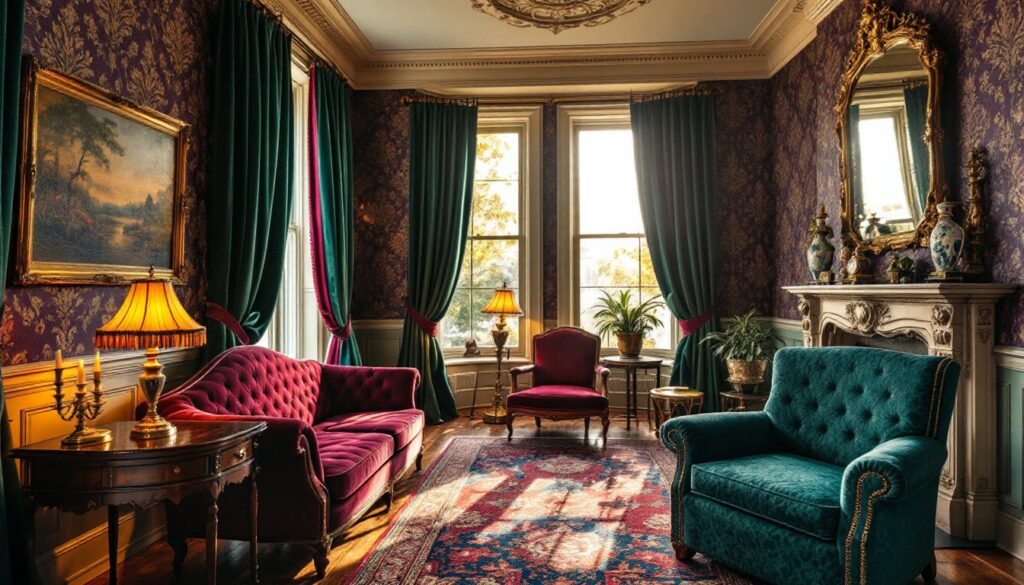

Victorian interior design isn’t about re-creating a museum, it’s about capturing the layered richness, ornamental detailing, and bold color sense of the 1837–1901 era in a way that works for modern living. Think carved woodwork, deep jewel tones, patterned wallpaper, and heavy drapery balanced with enough restraint to keep rooms livable. Whether someone’s restoring a period home or borrowing Victorian elements for a contemporary space, the trick is understanding what made the style distinctive: an unapologetic embrace of pattern, texture, and craft. This guide walks through the key components, color, furniture, millwork, textiles, and accessories, so anyone can build a Victorian-inspired interior that feels intentional, not overdone.
Table of Contents
ToggleKey Takeaways
- Victorian house interior design thrives on layered pattern, rich jewel tones, and ornamental details balanced with modern restraint to avoid overcrowded rooms.
- Deep saturated colors like emerald, burgundy, sapphire, and plum define authentic Victorian color palettes, often paired with gold, rust, or ivory accents.
- Substantial dark wood furniture with carved details, button-tufted velvet upholstery, and vertical emphasis creates the dramatic silhouettes central to the style.
- Architectural millwork—crown molding (4–8 inches), wainscoting (32–42 inches), picture rails, and ceiling medallions—adds authentic Victorian character without requiring full restoration.
- Layered window treatments with heavy drapes (2–3 times window width), sheers, and decorative valances, paired with ornate brass or wood hardware, complete the period aesthetic.
- Victorian interiors balance authenticity with livability by selectively mixing sub-styles (Gothic Revival, Aesthetic Movement) and using accessories like gilt mirrors, chandeliers, and botanical elements as finishing touches.
What Defines Victorian Interior Design Style?
Victorian design reflects the era’s industrial wealth and access to mass-produced decorative goods. Rooms were densely furnished, walls were covered in paper or fabric, and every surface invited embellishment. The style isn’t monolithic, it evolved through Early Victorian (Gothic Revival influences), Mid-Victorian (ornate Renaissance Revival), and Late Victorian (Aesthetic and Arts & Crafts movements), but common threads include vertical emphasis, layered textiles, and a love of pattern-on-pattern.
Key characteristics include high ceilings with decorative plaster medallions, picture rails and wainscoting, and floors in hardwood or patterned tile. Furniture is substantial, often in dark woods like mahogany, walnut, or rosewood. Fabrics lean heavily on velvet, brocade, damask, and tufted upholstery. Wallpaper, often flocked or featuring florals, damask, or medallion patterns, was ubiquitous. Lighting transitioned from gas to early electric, so fixtures tend to be ornate and chandeliers common.
Anyone tackling interior design techniques for a Victorian home should start by identifying which sub-style fits the architecture and personal taste. Gothic Revival leans darker and more dramatic, while Aesthetic Movement interiors lighten up with Japanese influences and simpler lines. Mixing eras within the Victorian umbrella is historically accurate, homes evolved as families redecorated, so there’s room for flexibility.
Essential Color Palettes for Victorian Interiors
Victorian color schemes were anything but neutral. Advances in synthetic dyes brought saturated hues to the middle class, and interiors reflected that access. Deep jewel tones, burgundy, emerald, sapphire, plum, dominated walls and upholstery. These were often paired with rich secondary colors like gold, rust, olive, or teal, creating layered, moody palettes.
Early Victorian spaces leaned Gothic: think charcoal, deep reds, and forest greens. Mid-Victorian interiors got bolder, with ruby, navy, and amber appearing alongside gilded accents. Late Victorian (especially Aesthetic Movement) introduced softer tones, sage, dusty rose, peacock blue, often with cream or ivory trim to lighten the effect.
When painting trim and millwork, use semi-gloss or high-gloss finishes to mimic the original look. Victorian woodwork was often stained dark or painted in contrasting colors (e.g., cream walls with deep green trim). Coverage typically runs 350–400 square feet per gallon for quality trim paint: plan for two coats over primer. If the home has original plaster, repair cracks with setting-type joint compound before priming to avoid telegraph lines through topcoats.
Don’t shy away from bold ceiling colors, Victorians often painted ceilings in soft blues, blush, or even patterned finishes. Modern interpretations can use design strategies that bring in one or two jewel tones as accents rather than flooding every wall, especially in smaller homes where full Victorian saturation can overwhelm.
Choosing Victorian-Style Furniture and Upholstery
Victorian furniture is heavy, carved, and often over-scaled by modern standards. Seating was formal: straight-backed settees, tufted parlor chairs, and fainting couches (chaises) upholstered in rich fabrics. Dining tables were large and expandable, sideboards ornately carved, and bedroom sets featured tall headboards and marble-topped dressers.
Look for furniture in dark hardwoods, mahogany, walnut, cherry, or rosewood, with turned legs, carved details, and applied ornamentation. Upholstery should be button-tufted, often in velvet, damask, or brocade. Fringe, tassels, and piping were standard. Avoid sleek mid-century or Scandinavian forms: Victorian silhouettes are curves, bulk, and verticality.
For upholstery fabric, budget 3–5 yards per chair and 10–15 yards for a sofa, depending on pattern repeat and style. Reproduction Victorian fabrics are available through specialty textile suppliers, or source vintage-look velvets and jacquards from home design retailers that carry traditional lines. If buying antique furniture, check joints and springs, original coil springs can be re-tied, but full reupholstery often costs $800–$1,500 per piece depending on region and complexity.
Don’t overload every room. Victorians had parlors crammed with furniture because they entertained formally and didn’t have open floor plans. Modern homes benefit from selective placement: a statement settee, a carved side table, a tufted ottoman. Pair Victorian pieces with layered textiles and let the furniture’s mass anchor the room without crowding circulation paths.
Ornate Architectural Details and Millwork
Victorian interiors relied on built-in ornamentation, ceiling medallions, corbels, crown molding, wainscoting, and picture rails, to add vertical drama and visual weight. Many of these details were originally plaster or carved wood: modern reproductions are available in polyurethane or MDF for easier installation.
Crown molding in Victorian homes was typically 4–8 inches tall, often with multiple profiles stacked for a layered look. Picture rails ran around rooms at about 8 feet above the floor, allowing artwork to hang from hooks and wire rather than nailing into plaster walls. Wainscoting or dados, usually 32–42 inches high, divided walls and protected plaster from furniture scuffs. Raised-panel or beadboard styles are both period-appropriate.
Ceiling medallions centered around chandeliers and came in diameters from 18 inches to over 36 inches. Install medallions before hanging the fixture: use construction adhesive and finishing nails, then caulk seams and paint to match the ceiling. For polyurethane medallions, a tube of adhesive and a few brads will hold: for heavier plaster reproductions, add screws into ceiling joists.
If adding millwork to a home that lacks it, match the scale to ceiling height. Standard 8-foot ceilings suit 3–5 inch crown and modest wainscoting: 9–10 foot ceilings can handle bolder profiles. Stain-grade hardwood millwork (poplar, oak, or pine) runs $3–$8 per linear foot: MDF primed stock is $1–$3 per foot. A miter saw is essential for clean corners: a coping saw works for inside corner joints on crown. Paint-grade millwork should get a coat of stain-blocking primer (e.g., BIN shellac-based) to prevent tannin bleed, especially on pine.
For restoration projects involving historic homes, take care to preserve original plasterwork and woodwork. Stripping old paint from carved details takes patience, heat guns and chemical strippers both work, but test in inconspicuous areas first to avoid damaging wood. If hiring out, expect $15–$30 per linear foot for professional stripping and refinishing of intricate millwork.
Victorian Window Treatments and Drapery
Victorian windows were dressed in layers: sheers or lace panels for privacy, heavy drapes for insulation and drama, and valances or swags for decorative top treatments. Fabrics were rich, velvet, brocade, damask, heavy cotton, and often trimmed with fringe, tassels, tiebacks, or contrast banding.
Drapery panels should be floor-length or puddle slightly (an extra 2–4 inches of fabric pooling on the floor). Victorians favored fullness: panels were typically 2–3 times the window width to create generous folds when open. Hang rods or decorative poles 4–6 inches above the window frame and extend 6–8 inches beyond each side to allow drapes to clear the glass when open.
Layering is key. Start with a sheer lace or voile panel mounted inside the window frame or on a tension rod for daytime privacy. Add heavy outer drapes on a rod or rings. Top with a cornice board, lambrequin, or fabric valance, these can be DIY projects using ¾-inch plywood or MDF cut to shape and upholstered. For a simpler approach, use a decorative curtain rod with finials in brass, wood, or wrought iron.
Fabric requirements add up quickly: for a standard 36-inch-wide by 84-inch-tall window, plan on 6–9 yards total for a pair of lined, full drapes, plus another 2–3 yards for a valance. Lining fabric (sateen or blackout) adds body and protects face fabric from sun fade. If sewing isn’t an option, many fabric shops offer custom workroom services: expect $200–$500 per window depending on fabric choice and treatment complexity.
Hardware matters. Reproduction Victorian brackets, rings, and finials are available in brass or oil-rubbed bronze. Use wall anchors rated for the weight, heavy velvet drapes can exceed 10 pounds per panel, and mount brackets into studs where possible.
Decorative Accessories and Finishing Touches
Victorian interiors were layered with personal collections, art, and decorative objects. Walls held framed oils, prints, and mirrors in ornate gilt or carved wood frames. Mantels and side tables displayed porcelain figurines, clocks, candlesticks, and botanical specimens under glass domes. Textiles appeared everywhere: lace doilies, embroidered table runners, needlepoint pillows, and fringed throws.
Lighting plays a key role. Chandeliers with crystal or glass prisms suit dining rooms and parlors: wall sconces with etched glass shades work for hallways. Table lamps with fabric shades (often fringed) and ceramic or brass bases add ambient light. Victorians loved gas-to-electric conversions, so reproduction fixtures that mimic that transition fit well. Look for UL-listed reproductions to ensure safe wiring.
Mirrors amplify light and space. Hang large overmantel mirrors with gilded or carved frames above fireplaces, or use pier mirrors (tall, narrow) between windows. Frame arrangements should be dense but organized, gallery walls weren’t called that, but Victorians packed art salon-style. Use picture rail hooks and wire to avoid driving nails into plaster walls.
Textile layering extends to floors. Area rugs in Oriental or floral patterns (or reproduction designs) anchor seating areas over hardwood. Authentic vintage rugs can be pricey: modern machine-made reproductions in traditional patterns cost $200–$800 for a 5×8 or 8×10 and are often more durable for high-traffic areas.
Potted palms, ferns, and aspidistra were Victorian staples, homes had conservatories or plant stands in parlors. Use jardinières (decorative ceramic or brass plant holders) or wicker stands for greenery. Add small details: brass door hardware, ceramic drawer pulls, cut-glass doorknobs. These touches reinforce the period without major renovation. For those exploring broader design techniques, starting with accessories lets someone test the Victorian aesthetic before committing to wallpaper or upholstery.
Conclusion
Victorian interiors reward those who embrace pattern, texture, and a little bit of excess, but the style adapts well to partial integration. Someone doesn’t need to turn a bungalow into a mansion: adding wainscoting, a jewel-toned accent wall, or a tufted velvet chair can evoke the era without a full commitment. The key is balance: layer thoughtfully, respect the architecture, and don’t mistake clutter for authenticity. With careful attention to millwork, textiles, and color, any space can channel Victorian elegance while staying livable for today.