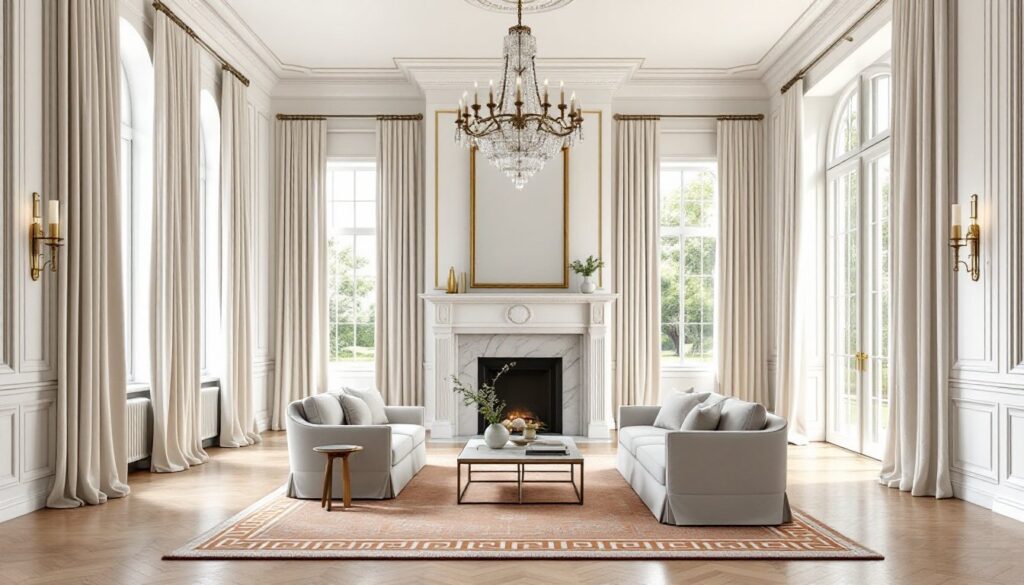

Neoclassical interior design borrows from Greek and Roman architecture, bringing columns, symmetry, and refined proportions into residential spaces. It’s not about recreating a museum, it’s about blending classical structure with livable, modern comfort. This style works in contemporary homes because it emphasizes clean lines, balanced layouts, and craftsmanship that stands the test of time. Whether someone is renovating a single room or planning a whole-house refresh, understanding the core principles of neoclassical design helps create spaces that feel both grand and grounded.
Table of Contents
ToggleKey Takeaways
- Neoclassical interior design emphasizes symmetry, proportion, and refined ornamentation inspired by ancient Greek and Roman architecture, making it ideal for creating spaces that feel both grand and grounded.
- Architectural details like crown molding, ceiling medallions, and pilasters are essential to neoclassical design and can be installed affordably using primed MDF or polyurethane alternatives to solid wood.
- Organize neoclassical rooms around a central axis by identifying a focal point (fireplace or large window) and arranging furniture, lighting, and decor symmetrically on either side to maintain visual balance.
- Use neutral base colors such as white, ivory, and soft gray for walls, with accent colors like deep blue, terracotta, and sage green introduced through textiles and upholstery rather than dominant wall paint.
- Flooring should feature natural hardwood in wide planks running straight, while window treatments require floor-length drapery mounted at ceiling height to emphasize vertical lines and classical proportions.
- Starting with architectural upgrades like crown molding and baseboards provides the most impact, followed by furniture arrangement and textile updates, allowing you to build neoclassical design gradually without requiring a large upfront budget.
What Is Neoclassical Interior Design?
Neoclassical interior design emerged in the mid-18th century as a reaction against the ornate excess of Baroque and Rococo styles. It drew inspiration from the archaeological discoveries at Pompeii and Herculaneum, reviving the architectural language of ancient Greece and Rome.
This style prioritizes symmetry, proportion, and restrained ornamentation. Unlike minimalist design, it doesn’t strip away detail, it curates it. Moldings, columns, and pilasters appear deliberately, not as afterthoughts. Furniture sits on axis. Windows and doors align across rooms.
In practical terms, neoclassical interiors use tall ceilings, classical columns or pilasters, decorative cornices, and neutral color palettes with occasional jewel tones. Materials lean toward natural stone, hardwood, plaster, and textiles like silk or linen. The goal is to create spaces that feel formal without being stuffy, elegant without being fragile.
Key Elements of Neoclassical Interior Design
Architectural Details and Molding
Neoclassical design relies heavily on millwork and trim. Crown molding, chair rails, wainscoting, and ceiling medallions are standard. These aren’t cosmetic add-ons, they define the room’s proportions and guide the eye.
For DIY installation, primed MDF or polyurethane molding works well and costs less than solid wood. A typical 16-foot living room might use 3½-inch crown molding (actual dimensions closer to 3¼ inches after milling) installed with a pneumatic brad nailer and construction adhesive. Miter cuts at inside and outside corners require a compound miter saw for accuracy. Coping inside corners with a coping saw provides tighter joints than mitering, especially in older homes where walls aren’t perfectly square.
Ceiling medallions, often made of lightweight urethane, mount with panel adhesive and finish nails. Choose a diameter roughly one-third the width of the light fixture for proportion. Paint everything the same color as the ceiling or walls to let the shadow lines do the talking.
Pilasters, flat, decorative columns applied to walls, frame doorways or divide long walls. These are non-structural and can be built from 1×6 or 1×8 pine boards with applied molding strips to mimic classical fluting or paneling. Installing them involves locating studs, scribing to uneven floors or ceilings, and securing with finish nails and adhesive.
Symmetry and Balance
Neoclassical rooms are organized around a central axis. Furniture, windows, doors, and architectural features mirror each other across this line. If there’s a fireplace on one wall, built-in bookcases or niches flank it evenly.
When planning a layout, start by identifying the room’s focal point, usually a fireplace, large window, or entry door. Measure and mark the centerline on the floor with chalk or painter’s tape. Arrange seating, tables, and case goods to reflect across that line. This doesn’t mean everything has to match, but visual weight should balance. A tall bookcase on one side pairs with a similar-height cabinet or a grouping of framed art on the other.
Lighting follows the same rule. A central chandelier anchors the ceiling, with wall sconces placed symmetrically. If installing new electrical, this may require running cable through walls or attics, permitting and code compliance (typically NEC Article 210 for branch circuits) vary by jurisdiction, so check local requirements before opening walls.
Color Palettes and Materials in Neoclassical Spaces
Neoclassical interiors favor neutral base colors: whites, ivories, soft grays, and beiges. These aren’t builder-grade neutrals, they’re complex, layered tones. Benjamin Moore’s “White Dove” or Sherwin-Williams’ “Alabaster” work as wall colors, offering warmth without yellow undertones. Trim and molding often go a shade lighter or the same color in a different sheen (satin on walls, semi-gloss on trim).
Accent colors draw from classical sources: deep blues (like Wedgwood), terracotta, sage green, and muted gold. These appear in upholstery, drapery, or painted furniture, not as dominant wall colors. A single accent wall disrupts symmetry, so color typically enters through textiles and decor.
Materials emphasize natural and durable finishes. Marble, limestone, and travertine suit flooring, fireplace surrounds, and countertops, though they require sealing and periodic maintenance. Engineered stone or porcelain tile in marble-look finishes offers a more forgiving alternative for DIYers.
Hardwood flooring, preferably white oak or walnut in wide planks (5 to 7 inches), runs in straight lines, not diagonal or herringbone, to reinforce the room’s geometry. Finish with a matte or satin polyurethane for durability. One gallon of poly covers roughly 400–500 square feet per coat: plan for at least two coats.
Textiles include linen, silk, velvet, and damask. Drapery should be floor-length, mounted at ceiling height to emphasize vertical lines. Use drapery rods with finials in brushed brass or oil-rubbed bronze. If sewing custom panels, allow 2 to 2.5 times the window width in fabric for proper fullness.
Furniture leans toward wood with classical lines: tapered legs, subtle carvings, and inlays. Avoid heavy distressing or rustic finishes. Upholstered pieces work in neutral tones with nailhead trim or tufting for texture. Incorporating proven interior design techniques helps maintain cohesion between furniture and architectural elements.
How to Incorporate Neoclassical Design Into Your Home
Start with architectural upgrades that establish the framework. Adding crown molding, baseboards, and door casings has the biggest impact. For a 12×14-foot room, budget roughly $300–$600 in materials (MDF or primed pine) plus tool rental if needed. Installation is a weekend project for someone comfortable with a miter saw and nail gun. Wear safety glasses and hearing protection, miter saws are loud and throw dust.
If the home has flat, featureless walls, consider adding picture frame molding or wainscoting. Picture frame molding involves cutting and installing trim in rectangular panels directly on the wall, typically 24 to 36 inches apart. Mark layouts with a level and painter’s tape before committing to nail holes. Fill gaps with paintable caulk, prime, and finish with the wall color.
For wainscoting, a raised-panel or flat-panel system works. Raised panel kits are available at home centers, though building custom panels from 1×4 rails, 1×6 stiles, and 1/4-inch plywood takes more time but costs less. Install the bottom rail 32 to 36 inches from the floor (standard chair rail height). Secure to studs with 2-inch finish nails and adhesive. Expect to spend a full weekend on a 12-foot wall.
Next, address symmetry in furniture placement. Measure the room and sketch a scaled floor plan on graph paper (1/4 inch = 1 foot is a common scale). Mark the centerline. Place larger pieces first, sofa, bed, or dining table, centered on the axis. Flank with matching or visually balanced items: a pair of nightstands, twin armchairs, or identical lamps.
Lighting upgrades reinforce the style. Swap builder-grade fixtures for a chandelier with crystal or glass accents, or a drum pendant in linen with brass hardware. For dining rooms, hang the fixture 30 to 36 inches above the table surface. In entryways with high ceilings, a larger chandelier (diameter in inches roughly equal to room width plus length in feet) provides scale. Many modern interior design strategies adapt classical lighting principles to suit contemporary electrical systems.
Wall treatments matter. Paint is the easiest route, but decorative plaster finishes like Venetian plaster add subtle texture and depth. Applying Venetian plaster requires a steel trowel, patience, and at least two coats. It’s more involved than rolling paint, but the result mimics aged European walls. Alternatively, high-quality paint in an eggshell or satin finish provides a softer look than flat.
Incorporate classical motifs through artwork and mirrors. Large gilt-framed mirrors amplify light and reinforce symmetry when hung above mantels or console tables. Choose frames with Greek key, acanthus leaf, or laurel wreath details. Oil paintings or classical prints in matching frames create gallery walls that feel curated, not cluttered.
For those exploring current interior design trends, neoclassical elements blend surprisingly well with contemporary materials like steel, glass, and concrete, especially when balanced proportions remain the priority.
Textile updates are a low-commitment starting point for interior design for beginners. Swap throw pillows for linen or velvet in muted tones. Replace lightweight curtains with heavier drapery panels in floor-length cuts. Add an area rug with a Greek key or medallion border, wool or wool-blend rugs wear better than synthetics and age more gracefully.
Finally, hardware upgrades tie the look together. Swap plastic door knobs for solid brass or bronze levers with backplates. Replace cabinet pulls with classical designs: ring pulls, bin pulls, or knobs with acanthus detailing. This is a simple swap, most knobs use standard 1-inch or 1¼-inch boring, and pulls use 3-inch or 3¾-inch centers. Keep a screwdriver and spare screws on hand: older cabinets may have non-standard sizing.
If renovating a kitchen or bath, consider incorporating columns or pilasters to frame cabinetry runs. Many interior design examples show how even modern kitchens benefit from classical proportions when columns flank ranges or sinks.
Conclusion
Neoclassical interior design translates centuries-old principles into functional, livable spaces. It’s about intentional choices, molding that frames a room properly, furniture arranged with purpose, and materials that improve with age. Whether tackling a single room or a full renovation, the style rewards patience and precision more than budget. Start with the bones, respect the proportions, and the details will follow.