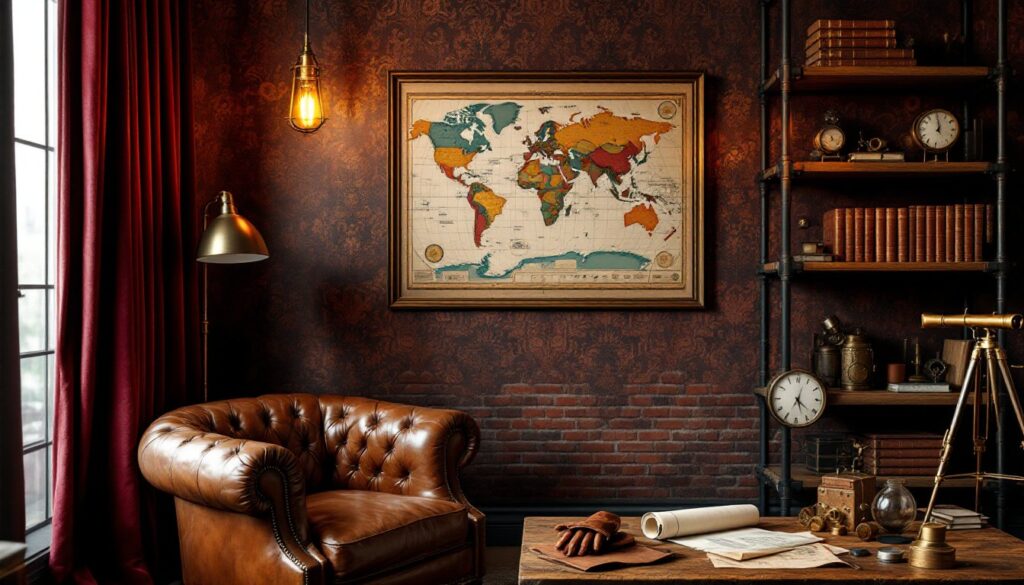

Steampunk interior design merges the elegance of Victorian-era aesthetics with raw industrial materials to create spaces that feel part vintage library, part inventor’s workshop. This style isn’t about following a Pinterest board, it’s about layering brass fittings, exposed gears, leather upholstery, and dark woods into a cohesive environment that tells a story. Homeowners drawn to steampunk appreciate its hands-on, customizable nature: many elements can be sourced from salvage yards, antique shops, or built in a home workshop. Whether someone’s tackling a single accent wall or converting an entire room, steampunk rewards creativity and a willingness to mix eras and textures.
Table of Contents
ToggleKey Takeaways
- Steampunk interior design blends Victorian elegance with industrial materials like exposed gears, brass fittings, and dark woods to create unique, story-telling spaces that reward customization and creativity.
- Essential steampunk elements include aged metal finishes (oil-rubbed bronze, antique brass), repurposed plumbing pipes, reclaimed wood, Edison bulb lighting, and layered textures from leather, velvet, and damask fabrics.
- Building a steampunk living room starts with statement walls using board-and-batten paneling or faux brick, substantial furniture like Chesterfield sofas, and multi-layered lighting with dimmers to set the atmosphere.
- Steampunk bedrooms should feel intimate and cocoon-like with wrought iron or brass bed frames, heavy velvet drapes, Edison bulb reading lamps, and layered bedding in jewel tones and classic patterns like damask.
- DIY steampunk decor projects—including pipe shelving, gear wall art, Edison bulb chandeliers, and gauge lamps—allow homeowners to build custom pieces at a fraction of retail cost using hardware store materials and basic tools.
- Creating steampunk interior design is a long-term collecting and building process where individual pieces are modified and arranged over time to reflect personal vision and craftsmanship, resulting in truly singular spaces.
What Is Steampunk Interior Design?
Steampunk interior design originated as a subgenre of science fiction but evolved into a tangible design movement celebrating the aesthetic of the Industrial Revolution combined with Victorian romanticism. The term “steampunk” itself references steam-powered machinery from the 19th century, and the design philosophy imagines an alternate history where that technology continued to develop with ornate, handcrafted detail.
Visually, steampunk interiors feature exposed mechanical components, gauges, pipes, gears, valves, paired with rich, warm materials like leather, mahogany, walnut, and aged brass. Color palettes lean toward deep browns, charcoal grays, burgundy, and amber, with metallic accents in copper, bronze, and gunmetal finishes.
Unlike minimalist or farmhouse styles, steampunk thrives on complexity and layering. It’s not a style for someone who wants a room to feel airy or sparse. Instead, it embraces density: bookshelves crammed with leather-bound volumes, walls hung with vintage maps and Edison bulbs in caged fixtures, furniture upholstered in tufted leather or brocade. The goal is atmosphere, a room that feels lived-in, inventive, and slightly anachronistic.
Essential Elements of Steampunk Style
Industrial Materials and Finishes
Steampunk design relies heavily on materials that show their construction. Exposed brick or concrete walls work well as backdrops, and if the home doesn’t have original brick, consider faux brick panels (typically 1/2-inch thick) or brick veneer for a DIY-friendly option. Metal finishes should look aged or weathered, oil-rubbed bronze, antique brass, and patinated copper are more appropriate than polished chrome.
Plumbing pipes repurposed as shelving brackets, curtain rods, or table legs are a steampunk staple. Standard 3/4-inch black iron pipe and fittings from any hardware store can be assembled with pipe wrenches into custom furniture frames. Seal raw steel with a clear coat to prevent rust if it’s purely decorative, or use actual plumbing-grade fittings if the piece needs structural integrity.
Wood elements should be dark and substantial. Reclaimed lumber, especially old barn wood or factory flooring, brings authenticity. If sourcing reclaimed wood, check for embedded nails or metal fragments before cutting, use a metal detector or magnet to avoid damaging saw blades. Finishes should be matte or satin: high-gloss polyurethane feels too modern.
Victorian-Era Decorative Details
Victorian influence shows up in ornamentation and textiles. Look for velvet drapes, damask wallpaper, tufted upholstery, and clawfoot furniture. Crown molding, wainscoting, and chair rails add architectural weight to otherwise plain walls. These don’t need to be original to the home, modern MDF or polyurethane moldings can be painted in deep hues to mimic period woodwork.
Lighting is critical. Replace builder-grade fixtures with Edison bulb pendants, vintage industrial cage lights, or converted gas lamp replicas. Many steampunk enthusiasts retrofit old gauges, pressure meters, or brass maritime instruments into working lamps, a project that requires basic electrical skills and UL-listed lamp kits for safety. Always follow NEC guidelines when modifying electrical fixtures: if hardwiring into a ceiling box, consult local code or hire a licensed electrician.
Accessories include antique clocks with visible gears, brass telescopes, globe bars, leather-bound books, and scientific instruments like sextants or old microscopes. Flea markets and estate sales are goldmines, but reproductions from specialty retailers work if the budget’s tight.
How to Create a Steampunk Living Room
Start with the largest surface: the walls. If the room has drywall, consider adding board-and-batten paneling or a faux brick accent wall behind the sofa or TV. Board-and-batten can be built with 1×4 or 1×6 pine boards (actual dimensions: 3/4″ x 3.5″ or 3/4″ x 5.5″) spaced vertically over a painted base. Use a level and stud finder to ensure boards are plumb and secured into wall studs with finish nails or construction adhesive.
For the ceiling, exposed wooden beams (real or faux) add Victorian heft. Faux beams made from lightweight polyurethane can be installed with construction adhesive and don’t require additional structural support. Paint them a dark walnut or ebony stain.
Furniture should be substantial. A Chesterfield sofa in leather or deep velvet is iconic, but any wingback or rolled-arm style works if it’s upholstered in rich fabric. Coffee tables can be DIY’d from reclaimed wood planks atop an iron pipe base, or source vintage industrial carts on casters. Functional storage doubles as decor: steamer trunks, wooden crates, or metal lockers all fit the aesthetic and keep clutter hidden.
Lighting layers the mood. Install a statement chandelier with Edison bulbs, add swing-arm wall sconces in brass or bronze near reading chairs, and use table lamps with exposed filament bulbs. Dimmer switches (standard residential dimmers work with most incandescent and dimmable LED bulbs) let occupants adjust the atmosphere.
Accessorize with wall-mounted gears (salvaged from old machinery or decorative reproductions), framed Victorian-era patent drawings, and a large antique map or nautical chart. Incorporating diverse interior design techniques helps balance the visual weight so the room doesn’t feel like a museum exhibit.
Steampunk Bedroom Design Ideas
A steampunk bedroom should feel intimate and cocoon-like. Start with the bed frame. Wrought iron or brass frames fit naturally, but a wooden four-poster in dark stain works too. If building a custom headboard, use reclaimed wood planks or upholster a frame in leather or velvet using a pneumatic staple gun and high-density foam.
Bedding should layer textures: a quilted coverlet or brocade duvet over crisp white or cream sheets, topped with velvet or faux-fur throw pillows. Avoid overly modern patterns, stick to damask, paisley, or solid jewel tones.
Nightstands can be repurposed industrial pieces: small metal cabinets, stacked vintage suitcases, or DIY pipe-frame tables with wooden tops. Salvaged gear mechanisms or old clock faces can be mounted to drawer fronts for a custom look. Use drawer pulls in antique brass or leather straps instead of modern knobs.
Lighting matters even more in a bedroom. Wall-mounted swing-arm reading lamps with Edison bulbs provide task lighting without taking up nightstand space. A ceiling medallion (polyurethane versions install with adhesive) around a vintage-style chandelier or pendant adds Victorian detail. String lights in Edison bulb style can be draped along a headboard or bookshelf for ambient glow, just ensure any exposed wiring is UL-listed and not overloaded.
Window treatments should be heavy: floor-length velvet drapes in burgundy, navy, or charcoal, hung on iron or brass rods. If privacy’s a concern, layer with lace sheers underneath for a Victorian touch. Applying thoughtful interior design strategies ensures the room feels cohesive rather than cluttered.
DIY Steampunk Decor Projects for Your Home
Pipe Shelving: Build open shelving using 3/4-inch black iron pipe and fittings. Measure wall space, cut pipe to length (most hardware stores will thread and cut pipe to spec), and assemble with flanges, elbows, and tees. Secure floor flanges to wall studs with 3-inch wood screws and lag bolts rated for the expected load. Add 1×10 or 1×12 pine or reclaimed wood planks as shelves, pre-drilled and secured with screws from underneath. Finish with dark stain or leave raw for an industrial look. For inspiration on modular builds, sites like Instructables offer detailed project walkthroughs.
Gear Wall Art: Salvage gears from old farm equipment, clocks, or motorcycles (check auctions, scrap yards, or online marketplaces). Clean with wire brushes and degreaser, then mount to a painted plywood backer using hex bolts or strong adhesive. Arrange in overlapping compositions for visual interest. Seal with matte clear coat to prevent rust indoors.
Edison Bulb Chandelier: Use a wooden plank (like a 2×6 or 2×8, actual size 1.5″ x 5.5″ or 1.5″ x 7.25″) as a base. Drill holes for pendant cord, thread UL-listed pendant light kits through, and wire in parallel to a single ceiling junction box. This project requires basic electrical knowledge, if unfamiliar with wiring, hire a licensed electrician. Finish the wood with stain or paint before installation. The result is a custom fixture for a fraction of retail cost.
Steamer Trunk Coffee Table: Find a vintage steamer trunk (check estate sales or online classifieds) and refinish the exterior with leather conditioner or oil-based stain. Add industrial casters rated for furniture (typically 100–150 lbs per caster) by drilling pilot holes and securing with lag screws. Line the interior with felt or fabric for storage. Some creative furniture hacks, similar to those found on IKEA Hackers, can be adapted to steampunk aesthetics with the right materials.
Gauge Lamps: Repurpose old pressure gauges, steam gauges, or speedometers into desk or table lamps. Drill a hole in the back for cord entry, mount a lamp socket kit inside, and wire according to kit instructions. Use an Edison bulb for authenticity. Secure the assembly to a wooden or metal base with epoxy or bolts. Always use UL-listed electrical components.
Leather-Wrapped Accessories: Wrap drawer pulls, shelf brackets, or picture frames in vegetable-tanned leather strips secured with contact cement or leather glue. Burnish edges with a wood slicker for a finished look. This adds texture and warmth without major construction.
Safety note: When working with reclaimed materials, wear gloves, safety glasses, and a dust mask. Old wood may contain lead paint or chemical treatments: test with a lead kit if unsure. Metal cutting and grinding require ear protection and a well-ventilated workspace.
For builders interested in expanding their skill set, exploring broader interior design tips and checking resources like Popular Mechanics for tool tutorials can improve project outcomes. Mixing steampunk with other historical or design ideas can also help balance a home’s overall aesthetic.
Steampunk interior design isn’t a quick weekend flip. It’s a style built over time, with pieces collected, modified, and arranged to reflect personal history and craftsmanship. The payoff is a space that feels singular, no two steampunk rooms look identical because each is shaped by the builder’s finds, skills, and vision.