
Victorian interiors represent one of the most distinctive and opulent design movements in home history. Emerging during Queen Victoria’s reign from 1837 to 1901, this style coincided with the Industrial Revolution and reflected the era’s prosperity through abundant ornamentation, layered textures, and eclectic historical references. Unlike minimalist trends that advocate for “less is more,” Victorian interiors embrace the philosophy of curated richness, every room tells a story through carefully selected furnishings, rich colors, and intricate details. Whether you’re restoring a period home or weaving Victorian elements into a modern space, understanding the fundamentals of Victorian house interior design helps you achieve authentic elegance without overwhelming your living spaces. This guide walks you through the essential components, color schemes, furniture choices, and practical strategies for adapting Victorian style to contemporary homes.
Table of Contents
ToggleKey Takeaways
- Victorian interiors embrace curated richness and eclectic historical mixing, with every element serving a purposeful role in creating layered, intentional design rather than chaotic clutter.
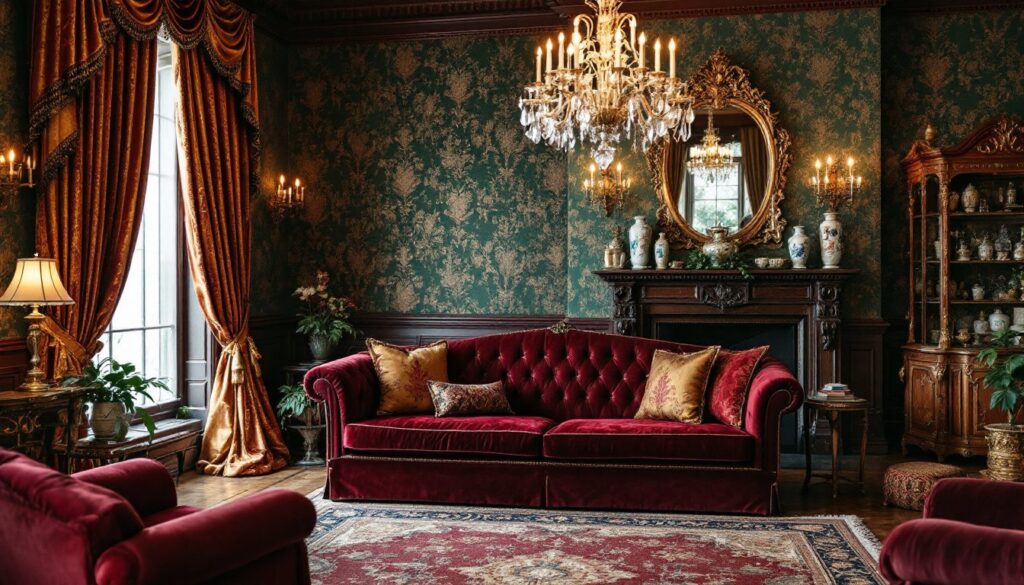
- Deep jewel-tone color palettes—including burgundy, forest green, navy, and rich teals—define authentic Victorian style, paired with patterned wallpapers, dado rail paneling, and architectural moldings that add visual distinction to walls.
- Victorian furniture features carved hardwoods, curved silhouettes, and tufted upholstery; statement pieces like chaise longues and ornate mirrors can anchor rooms without requiring every piece to match the period aesthetic.
- Heavy textiles including velvet, brocade, and damask fabrics with layered window treatments create the sensory richness characteristic of Victorian interiors, while pattern layering works when colors align and patterns vary in scale.
- Modern homes can adapt Victorian style by selecting anchor pieces—such as a crystal chandelier or carved chair—and blending them with contemporary furnishings, using accent walls and selective wall treatments rather than maximum period coverage.
- Gradual, phased accessorizing with ornate frames, collectibles, and layered rugs allows you to build authentic Victorian atmosphere while maintaining livable spaces suited to contemporary living.
Defining Victorian Design: Key Characteristics and Era Overview
Victorian interior design draws from multiple historical sources, Gothic Revival, Rococo, Renaissance, and Eastern influences, creating a deliberately eclectic, layered aesthetic. The Victorians didn’t shy away from mixing eras or cultures: instead, they treated their homes as personal galleries of taste and knowledge.
The defining principle was order within ornamentation. Rooms served specific functions with clear separation between public spaces (parlors, dining rooms) and private areas (bedrooms, studies). Bare walls were considered poor taste: every surface demanded attention through wallpaper, paint, paneling, or friezes. Furniture wasn’t arranged casually, pieces were positioned to maximize display and conversation, with clear purpose and hierarchy.
What sets Victorian interiors apart is the deliberate curation beneath the abundance. Yes, there’s decoration everywhere, but it follows a visual logic rooted in symmetry, color harmony, and thematic consistency within each room. A Victorian parlor might combine five different pattern types, yet they coordinate through shared colors and motif scales. This restraint within richness is what separates authentic Victorian design from chaotic clutter.
Understanding the historical context matters for modern adaptation. Early Victorian spaces (1837–1860) lean heavily toward dark, jewel-toned walls and Gothic-inspired furniture. Later Victorian rooms (1860–1901) permit lighter backgrounds and greater stylistic mixing, though colors remain rich rather than washed-out.
Essential Color Palettes and Wall Treatments
Victorian color choices directly reflect industrial-era manufacturing advances. Deep dyes became affordable, and gas lighting made darker walls practical, they hid soot and showed richness under lamplight.
Early Victorian palettes dominated spaces with burgundy, forest green, navy, and dark gold, typically paired with dark mahogany or walnut woodwork. These colors created dramatic, intimate rooms suited to evening gatherings. Later Victorian design broadened the spectrum while maintaining saturation: deeper teals, richer plums, warm chocolate browns, and sage greens, still bold, never pastel.
For wall treatment, a guide to Victorian-style homes highlights the importance of patterned wallpapers and architectural details. Florals, damasks, stripes, and geometric patterns layered across walls: friezes (horizontal decorative bands) divided walls into thirds for visual interest. Dado rail paneling, a waist-high wooden panel with decorative molding, created distinction between upper (painted or papered) and lower wall sections.
If using period wallpaper, consider scale carefully. Large-scale florals work in generous rooms: tight, geometric patterns suit smaller spaces or accent walls. Paint colors like deep forest green or burgundy also read authentically when paired with contrasting trim. The key: walls should feel purposeful and layered, not bare or secondary.
Furniture and Fixtures: Creating Authentic Period Pieces
Victorian furniture is instantly recognizable through carved hardwoods, curved silhouettes, and tufted upholstery. Mahogany, walnut, and oak were the materials of choice, selected for both beauty and durability. Common statement pieces include chaise longues, button-tufted sofas with rolled arms, ornate beds with carved headboards, tall etageres (open shelving units), sideboards, and carved bookcases.
The construction reflects the era’s manufacturing capabilities: visible joinery, hand-carved details, curved cabriole legs, and substantial proportions. Victorian furniture reads as solid and permanent. A single carved chair or ornate mirror can anchor a room without requiring every piece to match.
Architectural fixtures define the space. Prominent crown moldings, baseboards, ceiling medallions (plaster rings around light fixtures), and decorative hardware on doors and drawers establish authenticity. If your home lacks these details, crown molding and ceiling medallions are manageable DIY additions using pre-fabricated trim. Installation requires careful measurement and miter cuts, a power miter saw yields cleaner angles than a circular saw.
Wainscoting adds substantial visual weight and practicality. This wall paneling, typically 3–4 feet high, protects walls from damage while creating the tiered wall effect Victorians loved. Real wood wainscoting demands precise carpentry, but modern beadboard kits simplify installation. Always acclimate wood to your home’s humidity for 48 hours before installation to prevent warping.
Textiles, Patterns, and Layered Décor
Textiles are where Victorian interiors achieve their sensory richness. Heavy velvet, silk, brocade, lace, and damask fabrics with tassels and fringe dominate. Draperies weren’t minimal, they pooled slightly on the floor, used multiple layers (sheers under heavy drapes), and incorporated tie-backs with decorative hardware. A Victorian room without substantial window treatments feels incomplete.
Pattern layering requires a steady hand but follows clear logic. Florals, geometrics, stripes, and damasks coexist when they share a color family and vary in scale. A damask wall pairs with striped upholstery and a floral rug without clashing: the key is ensuring dominant colors align and no single pattern overwhelms. Victorian house interior design guides emphasize selecting one bold pattern per wall and layering complementary secondary patterns in textiles.
Every surface displays something. Rugs anchor seating areas, tapestries hang on walls, needlepoint cushions rest on chairs, tablecloths drape furniture. Collectibles, vases, ornamental boxes, glass figurines, crowd bookcases and mantel shelves in curated arrangements. This isn’t random: it’s intentional density that creates visual richness and tells stories about the occupants.
For modern adaptation: invest in one or two quality Victorian-era textiles (an authentic damask or velvet fabric) and build around them. Reupholstering an existing chair in velvet or brocade costs $200–400 but transforms a space. Layer rugs, add heavy curtains, and gradually introduce decorative objects rather than overcrowding immediately.
Lighting and Accessories: The Finishing Touches
Victorian lighting moves beyond basic illumination, it’s sculptural and ornate. Crystal chandeliers, brass or bronze wall sconces with intricate metalwork, and table lamps with fringed or tasseled shades define the era. These fixtures cast warm, directional light that creates shadow and drama, avoiding the flat, even brightness modern homes often prioritize.
If original fixtures aren’t present, reproduction chandeliers and sconces are widely available. Opt for crystal over plastic for authenticity: even modest crystal reads differently under candlelight than acrylic. Ensure electrical work meets code, hiring a licensed electrician for ceiling fixtures prevents safety issues and ensures compliance with the National Electrical Code (NEC).
Accessories complete the narrative. Ornate picture frames, mantel clocks with visible pendulums, cut-glass decanters, porcelain vases filled with dried botanicals, and leather-bound books fill shelves and surfaces. HGTV design shows frequently feature Victorian rooms where every object serves a visual or functional purpose. Avoid the trap of empty shelving: Victorian philosophy rejects white space in favor of intentional abundance.
Display collections on open shelving or in glass-fronted cabinets. A writing desk with visible stationery, a side table holding a reading lamp and stack of books, or a mantel arrangement of frames and candlesticks all signal inhabited, purposeful spaces rather than staged showrooms. Accessorizing is the most budget-friendly way to test Victorian style before committing to major structural changes.
Adapting Victorian Style for Modern Homes
Pure period authenticity works beautifully in designated restoration projects, but most modern homeowners blend Victorian elements with contemporary comfort. The goal: capture the elegance and richness without recreating a museum.
Start with anchor pieces. A single statement chandelier, an ornate mirror, or a carved chair establishes Victorian intent without requiring every furniture piece to match. Pair these anchors with modern comfort, contemporary sofas with clean lines work alongside a tufted Victorian chair. Mix textures rather than styles: keep walls, rugs, and textiles visually rich, then let contemporary furnishings breathe.
Color adaptation matters for modern flow. If your home is open-concept, traditional Victorian room separation becomes impractical. Instead, apply Victorian color palettes to specific zones: a deep jewel-tone accent wall behind a dining area, rich draperies that define a seating corner, or a Persian-style area rug that anchors furniture without physical walls.
Wallpaper and paint don’t require maximum coverage. A single accent wall with period-appropriate damask or floral wallpaper, paired with solid paint on other walls, achieves Victorian atmosphere without visual chaos. Modern transitional interior design demonstrates this balance, retaining architectural character while accommodating contemporary living.
Textile layering remains core. Add Victorian fabrics through upholstered furniture, heavy window treatments, and throw pillows rather than forcing every surface into period style. Reupholster existing pieces in velvet or brocade: purchase reproduction frames for artwork: gradually introduce collectibles to shelving. This phased approach builds authenticity while keeping spaces livable.
Conclusion
Victorian interiors succeed through layered richness, historical eclecticism, and curated abundance. Deep jewel-tone colors, carved wood fixtures, sumptuous textiles, ornate lighting, and thoughtfully displayed accessories create spaces that feel both elegant and inhabited. Modern adaptations retain these core elements, bold color palettes, statement furniture pieces, luxury fabrics, and detailed ornamentation, while simplifying layouts and editing décor for contemporary living. Whether restoring a Victorian home or selectively weaving period elements into a modern space, the philosophy remains constant: thoughtfulness triumphs over randomness, and intentional richness surpasses both emptiness and clutter. Start with one anchor piece, commit to a color story, and let the room develop its own narrative.