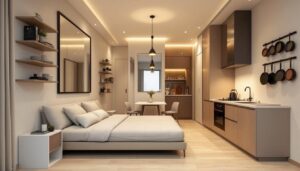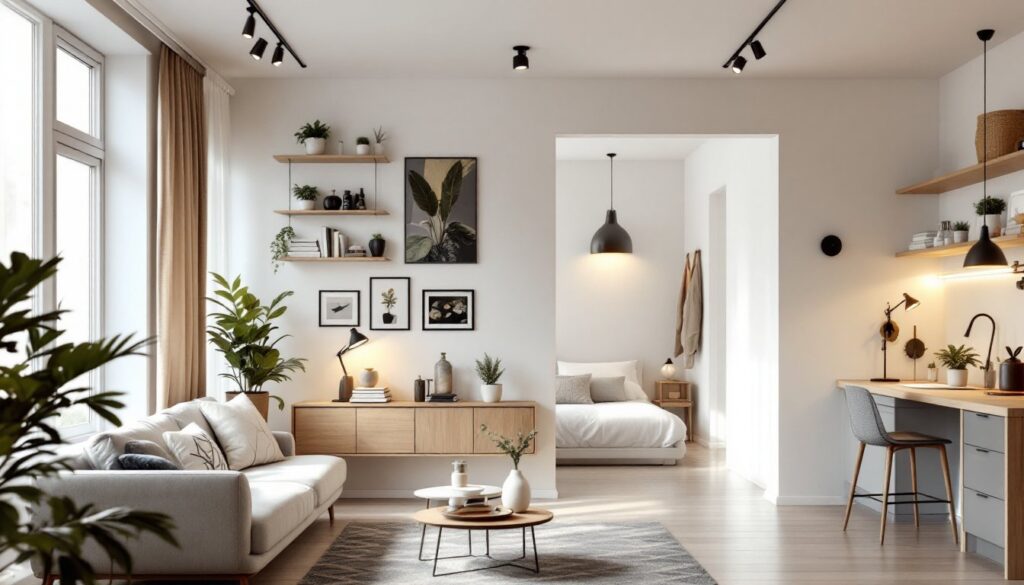

Living in a studio apartment means every square foot counts. Unlike a two-bedroom with separate spaces, a studio apartment decor strategy needs to work harder, creating visual interest, function, and flow within one open floor plan. The good news: decorating a studio is entirely doable without burning through your budget or hiring a designer. With smart choices around color, furniture, and layout, you’ll transform your efficiency apartment decor from cramped to intentional. This guide walks you through proven decorating ideas for studio apt that maximize space and style.
Table of Contents
ToggleKey Takeaways
- Studio apartment decorating ideas work best with a cohesive color palette using neutrals as a base and 1–2 accent colors to create visual flow in an open floor plan.
- Multi-functional furniture such as sofas with storage, murphy beds, and nesting tables maximizes limited square footage without sacrificing style or comfort.
- Vertical storage solutions like wall-mounted shelves, floating cabinets, and corner units keep clutter off floors and make ceilings feel higher in compact spaces.
- Layered lighting with ambient, task, and accent sources transforms mood and function while defining zones without permanent walls.
- Creating distinct living, sleeping, and cooking zones through strategic area rugs, furniture arrangement, and subtle dividers makes a studio feel intentional and spacious.
Choose a Cohesive Color Palette
A unified color scheme is your foundation. When your bedroom, kitchen, and living area occupy the same visual field, mismatched colors create visual chaos and make the space feel smaller.
Start with a neutral base, think soft white, warm gray, or pale taupe for walls. Neutrals reflect light and let your eye move freely through the space. Then layer in 1–2 accent colors using furniture, textiles, or art. Cool accents (blues, greens) recede visually and feel airy: warm accents (terracotta, mustard) add intimacy without overwhelming.
Keep your ceiling the same color as walls or slightly lighter. A darker ceiling visually lowers the room. Aim for 60% neutral, 30% primary accent, and 10% secondary accent across furniture and decor, this ratio keeps things balanced without monotony.
Matt and semi-gloss finishes on walls diffuse light: high-gloss paint reflects it and can feel cold in small spaces. If painting, invest in quality primer and two coats on any dark accent walls so coverage is even and durable.
Invest in Multi-Functional Furniture
Your furniture budget is tight, so every piece must earn its place. A sofa that’s also a guest bed, a coffee table with hidden storage, or an ottoman that doubles as seating and a footrest all let you skip redundant pieces.
Look for beds with built-in drawers underneath, these add storage without taking up floor space. A murphy bed or wall-mounted desk folds away when not in use, freeing up floor area during the day. Nesting tables stack and separate as needed. Shelving units can anchor a room divider or define the sleeping area without blocking sightlines entirely.
When shopping, measure your layout first. A sectional might feel luxe, but if it eats half your floor space, it’s counterproductive. Test how pieces feel in the room, walk around them, sit on them, open drawers. Cheap multi-functional furniture often feels flimsy: mid-range options from retailers known for small-space solutions tend to hold up better and look intentional.
One well-chosen piece beats three mediocre ones. If you’re building slowly, prioritize a quality sofa or bed, then add storage and task furniture as budget allows. Small apartment interior design.
Use Vertical Storage Solutions
Vertical storage is a studio apartment’s best friend. Walls are free real estate: floors are not. Wall-mounted shelves, cabinets, and pegboards keep clutter off surfaces and draw the eye upward, making ceilings feel higher.
Floating shelves are affordable and quick to install if studs are accessible behind drywall. Use a stud finder, mount brackets into studs (not just drywall anchors), and space them no more than 16 inches apart for safety. Shelves do add visual weight, so style them intentionally, books, plants, a few decorative pieces, and air space together create balance.
Hanging organizers, wall-mounted coat racks, and corner shelves capture unused space. Tall, narrow bookcases fit snugly in corners and hold far more than a squat, wide dresser. Behind-the-door hooks, tension rods, and hanging shoe organizers triple your storage without footprint.
When installing anything permanent, confirm you own or have landlord permission. Renters can use adhesive wall hooks, leaning shelves, and freestanding ladder racks instead. These look intentional and come down cleanly.
Group storage units by zone, kitchen items near the kitchenette, bedroom items near the sleeping area, so the eye doesn’t bounce chaotically and you can find things quickly.
Optimize Lighting for Ambiance and Function
Lighting transforms mood and function. A studio needs multiple layers: ambient (ceiling or overall), task (reading, cooking), and accent (highlight a focal point or decor item).
Overhead ceiling lights are standard but harsh. Pair them with a dimmer switch for flexibility, bright for cleaning or work, soft for evenings. Add portable task lights: a desk lamp for a work area, a floor lamp next to your sofa for reading, and a clip lamp over your kitchenette for cooking.
String lights, LED strips behind shelves, or wall sconces add character and warmth without eating floor space. They’re particularly effective for defining zones, a string light above a seating area signals “living room,” while a lamp by your bed signals “bedroom.”
Choose warm-toned bulbs (2700K–3000K color temperature) for relaxed evenings and cool-toned (4000K+) if you work from home. Mixing light sources prevents the flat, sterile feeling of a single ceiling fixture. Interior design solutions for.
Functional lighting should be bright enough to read comfortably, at least 450 lumens for a desk or reading spot. Decorative lighting can be dimmer and simply add visual interest.
Define Zones Without Walls
A studio has no walls to separate living, sleeping, and cooking zones, but you can create visual boundaries using layout, rugs, and lighting without closing off space.
Area rugs anchor furniture groups and define zones. A 5×8 or 6×9 rug under your sofa and coffee table signals “living room.” A smaller 3×5 rug beside your bed creates a “bedroom” boundary. Rugs are affordable ($30–$150), portable, and instantly divide a space psychologically.
Furniture arrangement matters hugely. Position your sofa with its back toward the bed area, it acts as a visual divider and creates two distinct zones. A low bookshelf or console table can do the same. Avoid placing furniture against walls: floating it in the center of zones creates intimacy and flow.
Curtains or a tension rod with a sheer fabric can separate the sleeping area without blocking light or sightlines. This is renter-friendly and movable. Darker fabrics create more separation: sheers are subtle.
Color and lighting also zone space. If your living area is warmer-toned with brighter light and your sleeping area cooler-toned with softer light, the two feel purposefully different even though being in one room. Examples from platforms like Young House Love showcase that renters can carry out affordably.
The key: intentional arrangement makes the studio feel purposeful, not cramped.
Add Personal Touches and Decor Accents
After function comes personality. Art, plants, textiles, and small decor items make a studio feel like home rather than a holding pattern.
Wall art draws the eye upward and adds visual interest without taking up floor space. A gallery wall of 5–7 affordable prints or a single large statement piece works well. Lean affordable art sources like local thrift stores, online marketplaces, or printable art you frame yourself. In a small space, one strong focal point (above the sofa or opposite the bed) is more impactful than scattered pieces.
Live plants humanize a space and improve air quality. Hanging pothos, string-of-pearls, or shelf plants require minimal care and add texture. A floor-standing fiddle leaf fig or monstera anchors a corner. If you don’t have a green thumb, low-maintenance succulents or faux plants are honest alternatives that cost less than dead real plants over time.
Layered textiles, throw pillows, blankets, a rug, curtains, add warmth without permanent changes. Swap them seasonally to refresh the look affordably. Mix patterns and textures: solid + solid + solid feels flat, but solid + striped + geometric keeps interest.
Accessories should reflect your hobbies or travels: books on shelves, a collection of ceramic mugs hung on hooks, travel photos. These tell a story and make the space distinctly yours. Avoid cramming every surface, negative space prevents visual chaos.
Small changes, swapping pillows, rotating artwork, rearranging a shelf, cost nothing and feel refreshing. DIY communities like Making Manzanita offer budget-friendly that work in studios.
Conclusion
Decorating a studio apartment is an exercise in intention, not limitation. By anchoring your space with a cohesive color palette, choosing multi-functional furniture, maximizing vertical storage, layering lighting, zoning smartly, and adding personal touches, you’ll create a home that’s both functional and reflective of who you are. Start with one or two changes, a fresh paint color or a strategic furniture rearrangement, and build from there. Small studios have massive potential when you treat them as a design puzzle rather than a constraint.