
California modern interior design merges mid-century minimalism with the laid-back warmth of coastal living. It’s a style rooted in natural light, clean lines, and the kind of relaxed sophistication that makes a house feel like home without trying too hard. Unlike stark minimalism or overly formal traditional design, California modern invites the outside in, blurring boundaries between garden and living room, patio and kitchen. This approach works whether someone’s renovating a 1960s ranch in the suburbs or updating a city condo. The appeal lies in its flexibility: it’s as much about material choices and spatial flow as it is about attitude.
Table of Contents
ToggleKey Takeaways
- California modern interior design blends mid-century minimalism with coastal warmth by emphasizing natural light, clean lines, and seamless indoor-outdoor living spaces.
- Authentic natural materials like solid wood, stone, and concrete form the foundation of California modern design, with texture layering—such as woven jute rugs and linen upholstery—adding warmth without clutter.
- Large sliding glass doors (8- to 12-foot spans) and continuous flooring between interior and exterior spaces are hallmark features that reduce energy costs while creating functional, open layouts.
- California modern color palettes rely on warm neutrals, soft whites, and muted earth tones pulled from nature, avoiding high-contrast schemes in favor of tonal shifts that let light and texture shine.
- Furniture should be low-profile and mid-century inspired with exposed wood frames and natural upholstery, while decor stays intentional with minimal, well-chosen objects and abundant greenery.
- DIY updates like swapping laminate for butcher block countertops, replacing heavy drapes with sheer linen, and installing retractable screen doors make California modern accessible without major structural renovation.
What Is California Modern Interior Design?
California modern evolved from mid-century architecture of the 1950s and 60s, when designers like Richard Neutra and Cliff May reimagined homes for the West Coast climate and lifestyle. The style emphasizes horizontal lines, open floor plans, and a direct relationship with outdoor spaces. Think flat or low-pitched roofs, large expanses of glass, and materials that age well, wood, stone, concrete.
What sets it apart from other modern styles is its warmth. Scandinavian modern leans cooler and more austere: industrial modern highlights raw metal and exposed brick. California modern softens edges with organic textures, earthy tones, and greenery. It’s less about showcasing a designer’s vision and more about creating a backdrop for daily life.
This style suits homeowners who want clarity without coldness. It’s practical for DIYers because many elements, like swapping heavy drapes for sheer linen panels or replacing clunky furniture with streamlined pieces, don’t require structural changes. But, achieving true indoor-outdoor flow often involves larger projects like installing sliding glass doors (8-foot spans are common) or removing non-load-bearing walls to open sightlines. Always confirm whether a wall is load-bearing before demo: consult local building codes and pull permits as needed.
Key Elements That Define the California Modern Aesthetic
Natural Materials and Textures
California modern relies on materials that feel honest and unprocessed. Solid wood (white oak, walnut, teak) appears in flooring, cabinetry, and furniture. Natural stone, like limestone or travertine, works for countertops and fireplace surrounds. Concrete, whether polished or left raw, shows up in floors and accent walls.
Texture matters as much as material. A room with all smooth surfaces feels sterile: layering in woven jute rugs, linen upholstery, or a wool throw adds warmth without clutter. Homeowners can integrate these through smart interior design strategies that balance hard and soft elements.
For DIY updates, swapping synthetic finishes for natural ones makes an immediate impact. Replace laminate countertops with butcher block (about $40–$60 per square foot for quality material). Sand and oil existing hardwood floors instead of covering them with carpet. Use low-VOC natural oil finishes (like linseed or tung oil) rather than polyurethane, they’re safer and enhance wood grain.
Avoid fake stone veneers or vinyl “wood-look” planking. California modern celebrates authenticity: materials should look and feel like what they are. If budget’s tight, less of a real material beats more of a facsimile.
Indoor-Outdoor Living Spaces
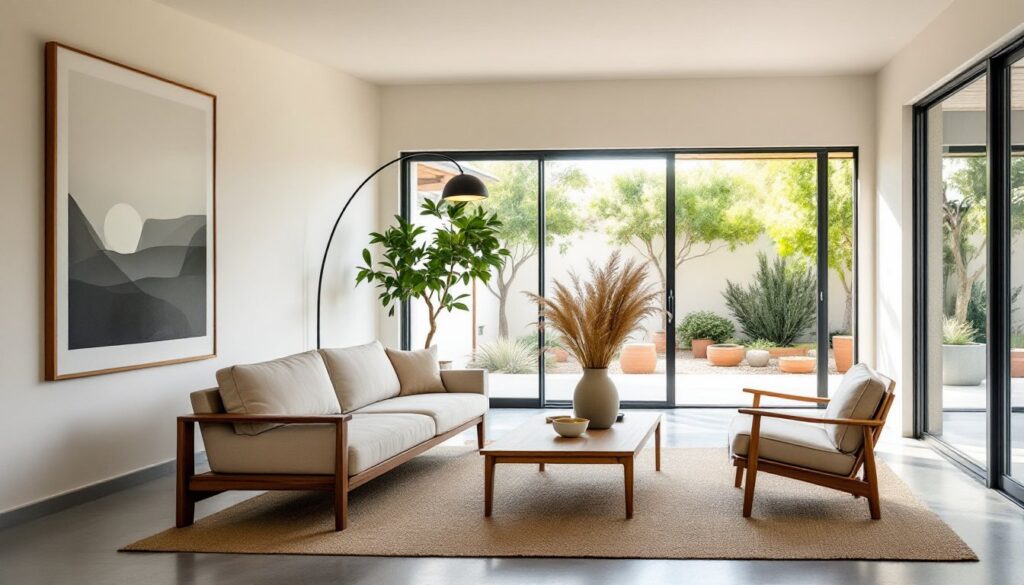
The hallmark of California modern is erasing the line between inside and outside. Large sliding or folding glass doors (8- to 12-foot spans) open living areas onto patios, decks, or courtyards. Floors often continue from interior to exterior using the same tile or stained concrete, reinforcing continuity.
This isn’t just aesthetic, it’s functional in temperate climates. Cross-ventilation reduces reliance on HVAC: natural light cuts daytime electric use. In practice, it means designing spaces so someone can cook in the kitchen, serve on the patio, and move between the two without stepping through a bottleneck.
DIYers can start small. Replace a standard patio door with a sliding glass system (brands like Pella or Andersen offer DIY-friendly options, though installation often requires two people and precise leveling). Add a retractable screen door to maintain airflow without bugs. Extend indoor flooring onto a covered porch using exterior-rated porcelain tile that matches interior selections.
For larger projects, like removing an exterior wall to install multi-panel folding doors, expect to hire a contractor. This work involves structural support (adding a beam or header rated for the span), flashing, and weatherproofing. Permit requirements vary, but most jurisdictions require one for exterior wall modifications. Budget $5,000–$15,000+ depending on span and door quality.
How to Choose the Right Color Palette for California Modern Style
California modern color schemes pull from the natural landscape, warm neutrals, soft whites, muted greens, and sun-bleached blues. The palette stays quiet, letting light and texture do the talking. Warm whites (with beige or gray undertones) work better than stark whites, which can feel clinical.
Walls typically stay neutral. Think Sherwin-Williams Alabaster (a soft, warm white) or Benjamin Moore Balboa Mist (a greige that shifts with light). These hues provide a calm backdrop and reflect daylight without glare. Trim often matches walls in a monochromatic approach, eliminating visual breaks and making rooms feel larger.
Accent colors come from nature. Terracotta, ochre, sage green, and dusty blue add warmth without shouting. Use them sparingly, a single accent wall, throw pillows, or pottery. Avoid high-contrast schemes (like black and white): California modern favors tonal shifts over stark division.
When painting, prep matters. Sand glossy surfaces, fill nail holes with lightweight spackling compound, and prime stained or dark walls with a high-hide primer (two coats if shifting from bold to neutral). Expect about 350–400 square feet of coverage per gallon for quality paint. Use a low-VOC or zero-VOC interior paint to maintain indoor air quality, important in homes with limited wall barriers to outdoor spaces.
For those exploring modern design trends, the shift toward earthy, biophilic palettes aligns perfectly with California modern principles.
Furniture and Decor That Capture the California Modern Vibe
Furniture should be low-profile, streamlined, and comfortable. Mid-century modern pieces, tapered legs, organic curves, minimal ornamentation, fit naturally. Look for sofas and chairs with exposed wood frames and cushions upholstered in linen, leather, or cotton canvas.
Scale matters. Oversized sectionals or bulky recliners disrupt the airy feel. Choose pieces proportional to the room, leaving enough space to move freely. A 68- to 72-inch sofa works well in a standard living room: go larger only if the space warrants it.
Decor stays intentional. A few well-chosen objects, ceramic vases, a sculptural wood bowl, framed black-and-white photography, make more impact than crowded shelves. Greenery is essential: potted fiddle-leaf figs, snake plants, or olive trees bring life without fuss. Use simple terracotta or concrete planters rather than decorative ceramic.
Lighting deserves attention. Pendant lights with brass or matte black finishes, arc floor lamps, and recessed LED cans (dimmable, 2700K–3000K color temperature) layer ambient, task, and accent light. Avoid ornate chandeliers or overly trendy fixtures that date quickly.
For DIYers sourcing furniture, mix vintage mid-century finds (check estate sales or online marketplaces) with affordable modern reproductions. Inspect vintage pieces for structural integrity, tighten loose joints with wood glue and clamps, and reupholster worn cushions with outdoor-grade fabric (it’s durable and stain-resistant). Avoid particle-board furniture: it sags and doesn’t age well. Solid wood or plywood construction lasts decades.
Drawing from classic interior design principles, balance form and function by choosing pieces that serve daily use without sacrificing clean lines.
Bringing California Modern Design Into Different Rooms
Living Room: Open the space by removing heavy curtains and swapping them for sheer linen or leaving windows bare if privacy allows. Use a low-profile sectional or a pair of armchairs around a simple wood coffee table. Add a jute or wool area rug (8×10 feet for most living rooms) to define the seating zone. Keep media equipment minimal, wall-mount the TV and hide cables with in-wall conduit or surface-mounted raceways.
Kitchen: California modern kitchens favor flat-panel cabinetry (also called slab-front) in light wood or matte white. Quartzite or soapstone countertops offer durability and a natural look. Open shelving (using 1×10 or 1×12 solid wood boards on heavy-duty steel brackets) displays everyday dishes and glassware, reducing upper cabinet bulk. Integrate appliances where possible, or choose panel-ready models. Backsplashes stay simple, subway tile, large-format porcelain, or a single slab of stone. Pendant lighting over an island should hang 30–36 inches above the counter for task light without head-bumping.
Bedroom: Keep furniture minimal, a platform bed (no bulky headboard or footboard), two nightstands, and a dresser. Use linen or cotton bedding in neutral tones. Layer texture with a chunky knit throw or a woven blanket. Skip valances and heavy drapes: install cellular shades or simple roller blinds for light control. A single piece of art above the bed or a large potted plant in the corner adds personality without clutter.
Bathroom: Swap builder-grade vanities for a floating wood cabinet (looks like it’s suspended from the wall, leaving floor space visible). Use large-format tile (12×24 inches or bigger) to minimize grout lines and simplify cleaning. Install a frameless glass shower enclosure instead of a curtain. Choose fixtures in brushed nickel, matte black, or unlacquered brass (which develops a patina over time). Add a wood stool or bench for a spa-like touch, and incorporate greenery if natural light permits.
For those seeking inspiring interior design examples, many California homes blend these elements with outdoor courtyards and natural materials. Exploring modern design galleries and contemporary decor showcases can spark practical ideas for material pairings and spatial layouts.
Homeowners can also pull from curated design ideas to see how different rooms balance openness with functionality, or consult general design guides for foundational principles that underpin California modern’s approach.