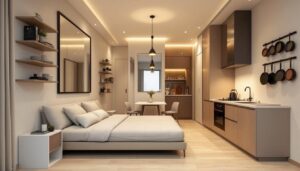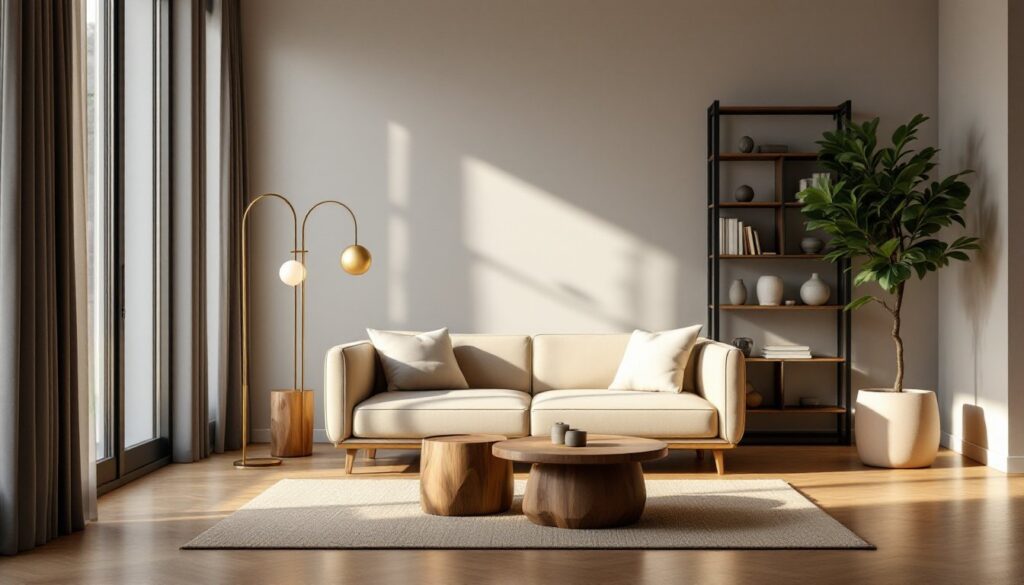

Form in interior design isn’t just about picking pretty furniture. It’s the three-dimensional shape of every object in a room, from the sofa and coffee table to the pendant light overhead. Understanding form helps homeowners and DIYers create spaces that feel cohesive, balanced, and intentional, not cluttered or awkward. When someone walks into a room and it just “works,” chances are the forms are working together. Getting this right doesn’t require a design degree, but it does require thinking about shape, proportion, and how objects relate to each other in space.
Table of Contents
ToggleKey Takeaways
- Form in interior design refers to the three-dimensional shape and structure of objects, and understanding how different forms work together is essential for creating cohesive, balanced spaces that feel intentional rather than cluttered.
- The three main types of form—geometric (structured, man-made shapes), natural (organic, flowing shapes), and abstract (sculptural, artistic shapes)—should be balanced in most successful interiors, with a 60-30-10 split helping prevent any single type from dominating.
- Visual balance and flow depend on distributing forms thoughtfully through either symmetrical mirroring or asymmetrical equilibrium, with repetition and scale variation creating depth and preventing rooms from feeling monotonous.
- Different room types benefit from different form choices: living rooms thrive on mixed geometric and natural forms, bedrooms prioritize softer curves for calm, kitchens need organic touches to soften inherent boxy geometry, and home offices function best with clean geometric forms.
- Common mistakes to avoid include overloading one form type, ignoring scale and proportion, neglecting negative space, mixing too many abstract forms, and sacrificing function for aesthetic appeal.
What Is Form in Interior Design?
Form refers to the shape and structure of objects within a space. It’s a fundamental element of design, alongside line, color, texture, and space. Every piece of furniture, every fixture, every decorative object has a form.
Form can be positive (the object itself) or negative (the space around it). A dining table is positive form. The area underneath it and the airspace around the chairs? That’s negative form, and it matters just as much. Too many positive forms crammed together kill the breathing room a space needs.
Unlike two-dimensional elements like wall color or patterns, form has depth, width, and height. It occupies real, measurable space. When someone drags a sectional into a small living room and can’t figure out why the room feels suffocating, that’s a form problem. The object’s three-dimensional footprint overwhelms the square footage.
In practical terms, homeowners deal with form every time they shop for furniture, hang a mirror, or choose a lighting fixture. The armchair’s rounded back, the coffee table’s sharp rectangular edges, the cylindrical shape of a floor lamp, all of these are forms, and each one contributes to (or detracts from) the overall feel of the room.
The Three Types of Form: Geometric, Natural, and Abstract
Designers classify forms into three main categories, and recognizing them makes it easier to mix and match intentionally.
Geometric forms have clean, man-made lines: cubes, spheres, cylinders, pyramids. Think of a square coffee table, a rectangular bookcase, or a drum-shaped ottoman. These forms feel structured and modern. They’re the backbone of contemporary and minimalist interiors. Geometric forms work well in spaces where order and symmetry matter, home offices, kitchens, and media rooms.
Natural forms come from the organic world. They’re irregular, flowing, and softer. A live-edge wood table, a stone fireplace surround, a wicker basket, or a potted fiddle-leaf fig all bring natural form into a room. These shapes add warmth and ease tension created by too many hard angles. Natural forms are especially effective in spaces meant for relaxation: bedrooms, reading nooks, and sunrooms.
Abstract forms don’t fit neatly into the other two categories. They’re sculptural, artistic, and often one-of-a-kind. An asymmetrical ceramic vase, a modernist sculpture, or a uniquely shaped accent chair falls into this group. Abstract forms act as focal points and conversation pieces, but they should be used sparingly. One bold abstract form in a room makes a statement: three or four create visual chaos.
Most successful interiors blend all three types. A living room might feature a geometric sofa, natural wood side tables, and an abstract table lamp. The key is balancing them so no single type dominates unless that’s the deliberate goal.
How Form Creates Visual Balance and Flow
Visual balance happens when forms are distributed in a way that feels stable, not lopsided. There are two main types: symmetrical and asymmetrical.
Symmetrical balance mirrors forms on either side of a central axis. Two matching table lamps flanking a sofa, identical nightstands on both sides of a bed, a pair of armchairs facing each other. This approach feels formal and orderly, and it’s easy to execute. It’s a safe choice for traditional spaces and rooms where calm is the priority.
Asymmetrical balance uses different forms that carry equal visual weight. A large sectional on one side of a room might be balanced by a tall bookshelf and a floor lamp on the other. The pieces aren’t identical, but they create equilibrium. This takes more practice to pull off, but it’s more dynamic and flexible. It’s common in design strategies that emphasize layering and personality.
Flow refers to how the eye moves through a room. Repeating similar forms guides that movement. If a room has all boxy furniture, adding one or two curved forms, a round mirror, an arched doorway, a circular rug, softens the space and gives the eye a place to rest. Conversely, a room full of organic shapes benefits from a few geometric anchors to prevent it from feeling too loose.
Proportion also affects balance. A massive sectional in a 10×12 room doesn’t just crowd the floor plan: it throws off the room’s visual weight. The form is too large relative to the space. Scaling furniture correctly ensures that no single piece dominates unintentionally.
Choosing the Right Forms for Different Room Types
Different rooms have different needs, and form choices should support function as well as style.
Living rooms benefit from a mix of geometric and natural forms. A rectangular sofa provides structure, while a round coffee table softens the angles and improves traffic flow. Avoid overcrowding with bulky forms: leave enough negative space for people to move comfortably. In smaller living rooms, choose furniture with exposed legs (rather than skirted bases) to create visual lightness.
Bedrooms should prioritize comfort and calm, which usually means leaning into softer, natural forms. Rounded headboards, oval mirrors, and organic wood nightstands all contribute to a restful atmosphere. If the bedroom furniture is mostly rectilinear (as many bed frames and dressers are), introduce curves through accessories: a round pouf, a table lamp with a spherical base, or a curved bench at the foot of the bed.
Kitchens are inherently geometric. Cabinets, countertops, and appliances are almost all boxy. To keep the space from feeling too rigid, bring in natural forms through bar stools with curved backs, round or oval pendant lights, or open shelving that displays pottery and bowls. A kitchen island with rounded corners also softens the look without sacrificing function.
Dining rooms work well with a dominant geometric form (the table) balanced by contrasting chair shapes. A rectangular table paired with sculptural dining chairs creates interest. Alternatively, a round dining table softens a boxy room and encourages conversation.
Home offices thrive on clean, geometric forms that support focus and organization. Desks, filing cabinets, and shelving units are typically angular. To prevent the space from feeling sterile, add a few organic touches: a potted plant, a wood desk organizer, or a natural fiber rug.
Mixing Forms for Dynamic Interior Spaces
Mixing forms keeps a room from feeling flat or one-note, but it requires restraint. The goal is contrast, not chaos.
Start with a dominant form type as the foundation. In a modern living room, that might be geometric furniture. In a coastal bedroom, it could be natural, organic shapes. Once the dominant form is established, introduce one or two contrasting forms to add tension and interest.
For example, a room anchored by a boxy sectional and a rectangular coffee table could use a round side table, a curved floor lamp, and an abstract wall sculpture. The geometric forms provide structure: the contrasting forms prevent monotony. The principles found in various design techniques emphasize this layered approach.
Scale variation also matters. Mixing large and small forms creates depth. A tall bookcase (vertical form) paired with a low-slung credenza (horizontal form) makes a room feel more dimensional than two pieces of the same height.
Repetition ties everything together. If a room includes one round form, echo it elsewhere. A round mirror, a circular tray on the coffee table, and a drum-shaped ottoman create a subtle rhythm. This repetition doesn’t need to be exact, just enough to suggest intentionality.
Avoid the trap of matching sets. A living room where every piece came from the same furniture collection tends to feel showroom-stiff. Mixing a modern sofa with vintage side chairs and a handmade coffee table brings character. Different forms from different sources create a collected, lived-in look that feels more interesting than catalog perfection.
Common Mistakes to Avoid When Working with Form
Even experienced DIYers can stumble when it comes to form. Here are the pitfalls to watch for.
Overloading one form type. A room filled entirely with geometric forms feels cold and institutional. A room with only organic, flowing forms can feel chaotic or unfocused. Balance is essential. If unsure, aim for a 60-30-10 split: 60% dominant form, 30% secondary form, 10% accent form.
Ignoring scale. A common mistake is choosing furniture that’s too large for the space. Measure the room and sketch a floor plan before buying. An oversized sectional might look great in the showroom, but if it blocks doorways or crowds walkways at home, it’s the wrong form for the space. Furniture should be proportional to the room’s dimensions, not just the homeowner’s wishlist.
Neglecting negative space. Every form needs breathing room. Cramming too many objects into a space, even beautiful ones, creates visual clutter. Negative space is not wasted space, it’s what allows the eye to rest and the room to feel intentional. Leave space between furniture pieces, avoid over-accessorizing surfaces, and resist the urge to fill every corner.
Mixing too many abstract forms. Abstract forms are high-impact. One sculptural piece can anchor an entire room. Three or four competing for attention just create noise. If a room includes an abstract light fixture, keep other forms more restrained.
Forgetting function. Form should never sacrifice usability. A coffee table with sharp geometric edges might look striking, but in a home with young kids, it’s a safety hazard. A chair with an interesting abstract shape that’s uncomfortable to sit in is a bad choice, no matter how cool it looks. Trends highlighted in resources like Elle Decor can inspire, but function always comes first in a livable home.
Conclusion
Form is one of the most powerful tools in interior design, and it’s entirely within reach for DIYers and homeowners. By understanding the three types of form, balancing them intentionally, and avoiding common mistakes, anyone can create rooms that feel cohesive and purposeful. The difference between a space that works and one that doesn’t often comes down to how well the forms relate to each other and the space they occupy.