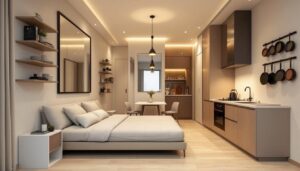
Living in a studio apartment or efficiency apartment doesn’t mean accepting cramped quarters or bland walls. With thoughtful planning and strategic choices, you can transform a compact open floor plan into a stylish, functional home that feels intentional. The key is layering smart decorating ideas that work with your space rather than against it, choosing pieces that serve double duty, planning color carefully, and using lighting and storage as design tools. Whether you’re tackling a one room apartment decor refresh or starting from scratch, these proven strategies will help you maximize every square foot while keeping your space looking polished and inviting.
Table of Contents
ToggleKey Takeaways
- Maximize vertical space with wall-mounted shelving, floating desks, and multi-functional furniture like beds with built-in drawers to keep studio apartment floors clear and functional.
- Adopt a cohesive color palette following the 60-30-10 rule (60% neutral, 30% secondary, 10% accent) to make small spaces feel intentional and less cluttered.
- Layer your lighting with dimmers, task lights, and ambient sources to add depth and flexibility, making decorating ideas for studio apartments feel more spacious and inviting.
- Create zone separation using rugs, furniture placement, and lighting rather than walls to define bedroom, living, and work areas within your open floor plan.
- Invest in hidden storage solutions like under-bed boxes, closet organizers, and vacuum bags to keep clutter out of sight and maintain a visually calm environment.
- Add personality through plants, art, textiles, and carefully curated decor objects that earn their place through function or beauty without overwhelming your compact space.
Use Vertical Space and Multi-Functional Furniture
In a studio apartment, your walls are real estate. Floor space is precious, so train yourself to think up instead of out. Wall-mounted shelving, floating desks, and high storage units pull the eye upward and create the illusion of higher ceilings while keeping your floor clear for movement and living.
Multi-functional furniture is non-negotiable. A bed with built-in drawers underneath, a storage ottoman that doubles as seating, or a console table that flips into a dining surface lets you do more with less footprint. When shopping, ask: what else can this piece do? A lofted bed with a workspace underneath is a classic efficiency apartment setup that divides your sleeping zone from your living area without adding a wall.
Wall-mounted desks, shelves above the sofa, and ladder shelving all maximize vertical real estate. Even a narrow corner can hold a tall, slim bookcase. Corner shelving units ($40–150 depending on material and size) take advantage of wasted space and keep items off the floor. When choosing furniture, prioritize pieces with open legs rather than solid bases, they visually reduce bulk and make the room feel less cramped.
Measure your ceiling height and doorways before you buy anything tall. A lofted bed system needs at least 7.5 feet from floor to bed base: if your ceiling is lower, standard bed risers or a lower-profile platform bed works better. Aim for at least 36 inches of walking space around major furniture pieces to keep the room feeling navigable.
Choose a Cohesive Color Palette
A unified color scheme makes small spaces feel intentional instead of cluttered. Start with a neutral base, soft whites, warm grays, or pale earth tones, on walls and larger pieces. These hues recede and create a calm backdrop that makes the room feel larger.
Then choose 2–3 accent colors to inject personality. Warm terracotta, muted sage, or soft navy work well because they’re deep enough to add interest without overwhelming. One accent wall is optional: instead, use your accent color in smaller doses: a painted dresser, throw pillows, artwork, or a woven rug. This approach keeps the space cohesive while letting you express style.
The 60-30-10 rule is a decorator’s shortcut: 60% neutral, 30% secondary color, 10% accent pop. In a 300-square-foot studio, this might mean light gray walls (60%), a soft blue sofa (30%), and mustard-yellow pillows or art (10%). The smaller your space, the more important this balance becomes, too many competing colors make even a large room feel chaotic.
For studio apartment decor ideas, avoid patterns that are too busy or large-scale florals that crowd the eye. Small geometric patterns, stripes, or subtle textures work better. Paint brands like Sherwin-Williams or Benjamin Moore offer sample cards: pick three you love and live with them in your space for a few days under different lighting before committing. This simple step prevents expensive repaints.
Strategic Lighting for Ambiance and Depth
Lighting does heavy lifting in small spaces. A single overhead fixture creates harsh shadows and flattens the room. Layered lighting, ambient, task, and accent, adds depth and flexibility.
Start with dimmers on your main light (or add a dimmer switch if you have a standard fixture). This is a 30-minute DIY swap that costs $15–30 for the switch. Next, add task lighting where you work or read: a desk lamp or focused pendant light. Finally, add ambient lighting, string lights, LED strips behind shelves, or a floor lamp in a corner, that softens the whole room. This combination makes the space feel bigger because light bounces around instead of staying in one corner.
Light color matters too. Warm white (2700K) feels cozy and flatters skin tone: cool white (4000K) is energizing for workspaces. In a small apartment, warm white throughout usually feels better. String Edison bulbs or decorative pendant lights double as art, pulling the eye around the room instead of making it feel monotonous.
Stand fixtures take up less visual weight than bulky lamps. Floor lamps with thin metal frames, arc lamps that reach over furniture, and wall sconces all provide light without consuming floor or table space. A brass or matte black finish tends to blend better than chrome in smaller rooms. Budget $40–120 for a quality floor lamp: cheap construction gets wobbly after a few adjustments.
Create Zone Separation Without Walls
A one room apartment decor challenge is preventing the space from feeling like one jumbled box. Zoning uses furniture, rugs, and lighting to define areas, bedroom, living, workspace, without construction.
A rug under the sofa and coffee table visually anchors the living zone. Place a different, smaller rug under the bed or at the foot of it: this signals a sleeping area. If budget allows, choose rugs in the same color family but slightly different tones or textures so they feel intentional rather than mismatched. A 5′ × 8′ rug runs $60–200 depending on material: natural jute is affordable and durable.
Furniture placement creates invisible boundaries. Angle your sofa 45 degrees from a wall, or position it to face away from the bed. A tall shelving unit, room divider, or even a heavy curtain rod with a linen curtain can visually separate zones without the closure of a real wall. Open shelving is better than a solid divider because light still flows through.
Lighting zones reinforce the separation. Overhead light for the whole room, a desk lamp for your work area, and softer lighting by the bed each signal a different function. When you turn on just the desk lamp or bedside light, the room psychologically “becomes” that zone. This layering is free (if you’re using lamps you already own) and immediately makes the space feel organized.
Cultural touches like wall hangings or a small bookshelf also define areas without blocking sightlines. A gallery wall above the sofa, floating shelves with a curated edit, or even peel-and-stick wallpaper on one accent wall organizes the visual space and signals purpose.
Incorporate Storage Solutions and Organize Clutter
In an efficiency apartment, visible clutter reads as chaos. Hidden storage is your secret weapon. Under-bed storage boxes, closet organizers, and wall-mounted cabinets keep things tucked away while remaining accessible.
Measure your closet and invest in slim, space-saving hangers: cedar blocks: and vacuum storage bags. These costs are small ($15–40 total) but dramatically increase usable closet volume. Vertical dividers for shelves turn a jumble into organized stacks. Behind-door organizers, over-the-door hooks, and magnetic strips on the inside of cabinet doors steal space that would otherwise be wasted.
Open shelving requires curation. If you display items, edit ruthlessly, a few beautiful books, plants, and framed photos beat a chaotic collection of random objects. The interior design ideas that work best in small spaces follow the principle of “less is more.” Store seasonal items in vacuum bags under the bed or in the back of a high closet shelf.
Modular storage, stackable cubes, baskets on shelves, or drawer dividers, keeps everything assigned a home. When you know where something lives, you’re more likely to put it away, and the room stays visually calm. Baskets in neutral colors (cream, gray, natural woven) blend into the background better than bright colors.
Consider a small dresser with a mirror on top rather than a full dresser: this serves both storage and lets you get ready without a separate vanity. A narrow bar cart tucked in a corner holds kitchen items, office supplies, or beauty products in a small footprint. Vertical pegboards for keys, wallets, and small tools are cheap ($20–40 with pegs) and keep essentials visible and off surfaces.
Add Personal Touches and Decor Accents
After the bones of your studio apartment decorate strategy are set, personality keeps it from feeling sterile. Plants, art, textiles, and collections make the space yours.
Plants are the easiest decor win. They soften hard corners, add color, improve air quality, and scale beautifully in small spaces. Pothos, snake plants, and monstera are nearly indestructible and come in trailing varieties that work on high shelves or hanging from a curtain rod. Even one or two well-placed plants warm up a corner. Ceramic or ceramic pots from budget retailers run $10–30 and look far more intentional than plastic nursery pots.
Art and wall hangings anchor a room. One large piece or a small gallery wall above a sofa creates a focal point and makes the space feel curated. Unframed art from modern home decor resources or thrifted frames filled with prints you love are affordable ($15–50 total). Lean artwork against the wall instead of hanging it if you rent and can’t use nails, it still reads as intentional and looks current.
Textiles add warmth and break up solid colors. A throw blanket folded over a chair arm, layered pillows on the sofa, and a soft rug all make a studio feel inviting. Mix textures: smooth linen with chunky knit, matte with subtle sheen. This layering costs $50–150 depending on quality but transforms the whole feel of the space.
Small decor objects, a desk organizer that’s beautiful, a decorative tray for your nightstand, a small potted succulent, anchor shelves and surfaces without clutter. Edit the rule: one item per shelf or surface unless they’re part of a grouping. A stack of three design books under a table lamp, or three candles of varying heights, feels intentional. Ten random items scattered around reads as visual noise.
Personal photos or meaningful art remind you why you live here. A few framed prints of places you love or a canvas with a meaningful quote make the space feel lived-in and reflect your priorities, not a magazine’s aesthetic.
Conclusion
Decorating a studio apartment is an exercise in intentionality. Every piece should earn its place through function, beauty, or both. Start with small apartment interior design strategies focused on vertical storage and multi-use furniture, establish a calm color base, layer your lighting, and define zones without walls. Hide clutter, add personal touches, and revisit your space seasonally, swap pillows, rotate art, update plants. A well-decorated studio isn’t smaller: it just feels smarter. With these ideas for decorating an efficiency apartment, your space can be both functional and a reflection of who you are.