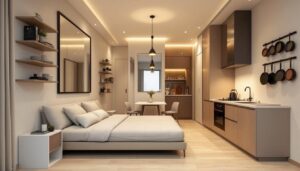

An efficiency apartment, also called a studio apartment or one-room apartment, doesn’t have to feel cramped or bland. With thoughtful decorating strategies, you can create a space that’s both functional and genuinely inviting. The key isn’t adding more stuff: it’s choosing what matters and arranging it smartly. Whether you’re renting a 400-square-foot unit or decorating a smaller one-room apartment, these practical ideas for decorating an efficiency apartment will help you maximize every inch without very costly or feeling cluttered.
Table of Contents
ToggleKey Takeaways
- Maximize vertical space with floating shelves, wall-mounted cabinets, and tall bookcases to keep your floor open and create an illusion of height in decorating an efficiency apartment.
- Choose a cohesive three-color palette with a neutral base, supporting color, and single accent to make your small space feel larger and less cramped.
- Layer your lighting with ambient, task, and accent options—including dimmer switches, table lamps, and LED strip lights—to define zones and add warmth throughout your one-room apartment.
- Invest in multi-functional furniture like beds with storage, ottomans with hidden compartments, and fold-down desks that justify their space and adapt as your needs change.
- Layer textures and patterns thoughtfully, mixing smooth and woven materials while limiting bold patterns to one per visual zone to prevent overwhelming your studio apartment.
- Incorporate live plants, wooden elements, and mirrors to brighten your space naturally and create a warm, inviting atmosphere without expensive finishes.
Maximize Vertical Space With Smart Storage Solutions
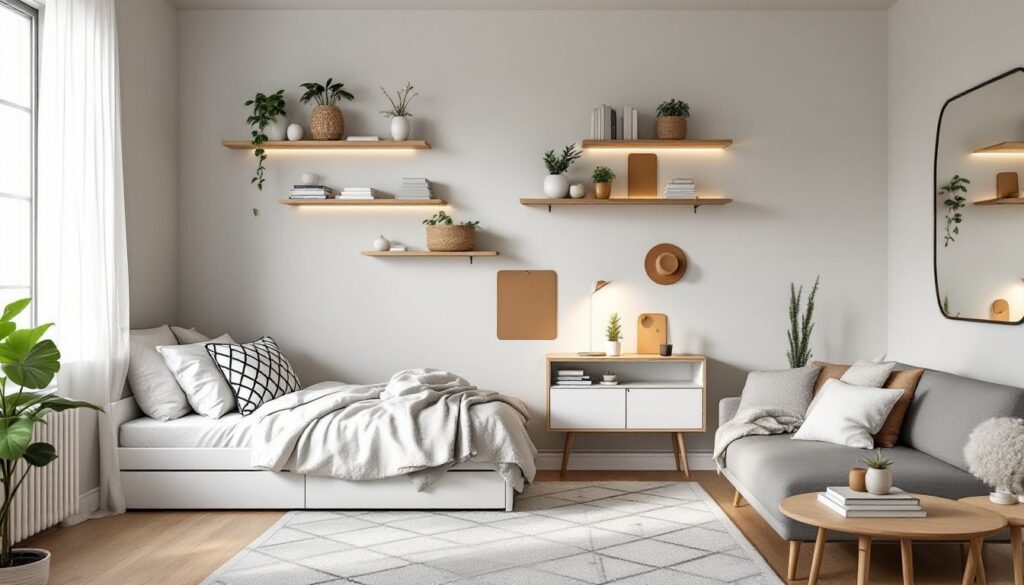
In a studio apartment, floor space is premium real estate. That’s why vertical storage is non-negotiable. Floating shelves, typically 24 to 36 inches wide and 8 to 12 inches deep, can hold books, plants, and decor without stealing precious floor room. Install them 12 to 18 inches apart on your walls using wall anchors rated for your shelves’ weight and contents.
Wall-mounted cabinets and cube organizers work similarly. Over-the-door hooks and hanging organizers are low-cost options for jackets, belts, and bags. If you’re renting and can’t drill, adhesive hooks rated for 15 to 25 pounds each are reversible and don’t damage walls.
Consider a tall, narrow bookcase instead of a wide short one, it draws the eye upward and creates an illusion of height. Pegboards are underrated for small spaces too: they hold everything from kitchen tools to craft supplies and look intentional, not chaotic. The rule here is simple: make the walls work so your floor stays open for living.
Choose a Cohesive Color Palette to Expand Visual Flow
A scattered color scheme makes small apartments feel even smaller. Stick to a palette of three colors: a neutral base (white, soft gray, warm beige), one supporting color, and one accent. Light and neutral walls, especially eggshell or satin finish paint for easy cleaning, reflect light and feel airy. A 400-square-foot room painted in pale gray or warm white instantly feels less cramped than one with bold accent walls on every side.
Use your accent color sparingly: a throw pillow, artwork, or a single painted shelf. This approach keeps your studio apartment decorate scheme cohesive while letting your personality show. Repeat your supporting color in two or three places, maybe your rug and a lampshade, so the eye travels naturally across the room without stopping abruptly.
Don’t confuse minimalism with boring. A cohesive palette lets you use pattern and texture intentionally. Small apartment decorating ideas often fail because people try too many colors at once: unity always wins in tight quarters.
Use Strategic Lighting to Define Zones and Add Warmth
One overhead fixture is a recipe for harsh, flat light. Layered lighting, a combo of ambient, task, and accent light, makes even a studio apartment feel intentional and welcoming. Install a dimmer switch on your main ceiling light so you can adjust brightness throughout the day and evening. This costs around $15 to $30 and takes 15 minutes if you’re comfortable with basic wiring: if not, hire an electrician.
Add a table lamp on your nightstand and a floor lamp in a reading corner. These cast softer pools of light and help define zones: your sleeping area, work area, and relaxation zone. String lights or strip LEDs behind floating shelves add warmth and visual interest without taking up space.
Interior design ideas are amplified when lighting is thoughtful. LED bulbs in warm color temperatures (2700K) create a cozy atmosphere, while 3000K or 4000K feels more neutral and energizing for a work desk. The psychology is real: good lighting transforms how people feel in a small space.
Invest in Multi-Functional Furniture That Earns Its Place
In an efficiency apartment, every piece of furniture must justify its space. A bed with under-bed drawers stores off-season clothes or bedding. An ottoman with hidden storage holds blankets while serving as extra seating and a footrest. A console table behind your sofa, if you have room, provides desk space and storage in one.
One-room apartment decor benefits enormously from a daybed or sofa bed. It’s a couch by day and a guest bed by night, saving you from a separate guest room you don’t have. Look for space-saving sectionals designed for apartments, typically 76 to 90 inches wide, that don’t dominate the room.
A few smart hacks: a tall bookcase with a desk built into the base gives you storage and workspace. A fold-down wall desk (murphy-style) disappears when not in use. A small apartment hacks guide reveals dozens of clever IKEA modifications, ladder shelves that double as room dividers, hanging storage that mounts to existing furniture, and cart systems on wheels for flexible storage. The goal is fluidity: you should be able to reconfigure your layout as your needs shift.
Layer Textures and Patterns Without Overwhelming the Room
Texture adds depth and warmth without clutter. Mix a smooth ceramic vase with a woven basket, a soft throw blanket with a geometric pillow, and a wooden shelf with metal brackets. The tactile variety keeps the eye engaged and prevents the room from feeling cold or sterile.
Patterns are fine in small spaces, they just need rhythm. If your rug has a geometric pattern, keep pillows solid or subtly textured. If curtains are striped, balance them with a solid duvet. The rule is: no more than two bold patterns in the same visual zone. Layer linen, cotton, wool, and knit textiles together to create a lived-in feel that’s still organized.
Transform your space with style and function by using textures to visually separate areas. A plush rug under your seating area and a jute rug in your sleeping zone help define each zone without a wall or barrier. This works especially well in studio apartment decorate schemes where physical separation isn’t possible.
Bring Life Into Small Spaces With Plants and Natural Elements
Live plants soften edges and improve air quality, psychological wins in any space. A pothos or snake plant thrives in low light and doesn’t demand much. Taller plants like a fiddle-leaf fig or rubber tree draw the eye upward, reinforcing that illusion of height. Hanging plants from ceiling hooks free up floor and shelf space, and they’re visually striking.
Wooden elements warm up small spaces naturally. A wooden ladder shelf, wooden picture frames, and a wooden cutting board on open shelving all ground the room without adding bulk. Woven baskets (water hyacinth, rattan) store items while maintaining airiness, better than plastic bins that look utilitarian.
Natural light is your best decorator. Sheer curtains let light filter through while maintaining privacy. A large mirror opposite a window bounces light around the room and makes the space feel twice as big, this is a classic and genuinely effective trick. According to practical modern home decor inspiration, mixing plants with reflective surfaces and natural materials creates a balanced, inviting environment that doesn’t require expensive finishes. Even small apartment decorating ideas succeed when greenery and natural materials are thoughtfully placed.
Conclusion
Decorating an efficiency apartment is about making intentional choices, not settling for less. Focus on vertical storage, cohesive colors, thoughtful lighting, and furniture that works harder than it looks. Layer textures and add plants to make the space feel like home. These strategies work because they respect the reality of small spaces: less is genuinely more, but less doesn’t mean boring. Your one-room apartment deserves a design that reflects who you are and supports how you actually live.