
Modern farmhouse style has evolved from a niche trend into one of the most enduring approaches to home design. It balances the warmth of rural living with the clean lines and function of contemporary spaces. Homeowners are drawn to it because it doesn’t demand perfection, scuffed floors and lived-in furniture fit right in. This style works in urban lofts, suburban ranch homes, and actual farmhouses. It’s adaptable, forgiving, and surprisingly practical for families who actually use their spaces. This guide walks through the design principles, material choices, and room-by-room strategies that make modern farmhouse interiors work.
Table of Contents
ToggleKey Takeaways
- Modern farmhouse interior design balances rural warmth with clean contemporary lines, prioritizing function over fussiness and working in urban, suburban, and actual farmhouse settings.
- Natural materials like reclaimed wood, wide plank flooring (5-7 inches), and textured textiles such as linen and jute are foundational to achieving authentic modern farmhouse style.
- Neutral color palettes anchored by whites, grays, and warm neutrals like greige and taupe let architectural details shine, with accent colors kept muted and earthy like sage green or dusty blue.
- Modern farmhouse kitchens require durable countertops (quartz or butcher block), classic subway tile backsplashes, and functional hardware in matte black or brushed finishes to handle meal prep and gatherings without clutter.
- Bedroom design emphasizes calm and layered textures through natural linens, mixed nightstands, simple lighting, and optional shiplap accent walls that create retreats grounded in honest materials.
- Successful modern farmhouse spaces rely on visible storage, minimal accessories, and intentional placement—avoiding over-decorated surfaces while maintaining warmth through patina and handcrafted details.
What Is Modern Farmhouse Interior Design?
Modern farmhouse interior design merges the simplicity of rural architecture with contemporary comfort and streamlined aesthetics. It takes the bones of traditional farmhouse living, exposed beams, shiplap, wide plank floors, and strips away the clutter and dated country kitsch.
The style prioritizes function over fussiness. Furniture tends to be substantial but not ornate. Surfaces are durable. Storage is visible but organized. Unlike purely modern spaces that can feel sterile, modern farmhouse interiors include texture, patina, and handcrafted details that make a room feel occupied and welcoming.
It’s not about recreating a 19th-century homestead. It’s about borrowing the best parts, natural light, open layouts, honest materials, and pairing them with the conveniences and design sensibility of today. For those interested in refining their approach, exploring different interior design techniques can help translate this aesthetic into any room.
Key Elements of Modern Farmhouse Style
Natural Materials and Textures
Materials define modern farmhouse more than color or furniture shape. Reclaimed wood, whether as flooring, ceiling beams, or accent walls, introduces age and character without requiring antique hunting. Wide plank flooring, typically 5 to 7 inches wide, creates visual calm and makes small rooms feel larger.
Shiplap remains a staple, though it’s often installed with tighter gaps (1/8 inch or less) and painted in matte finishes to avoid the overly rustic look. Use it on accent walls or ceilings, not every surface. For structural projects involving wall removal or beam installation, check local building codes and consult a structural engineer if load-bearing elements are involved.
Metal accents, wrought iron, matte black steel, galvanized finishes, add contrast without competing with wood tones. Pendant lights, cabinet hardware, and stair railings are common applications. Avoid mixing too many metal finishes in one space: stick to two at most.
Textiles bring softness. Linen, cotton, wool, and jute are all appropriate. Layering is key: a linen sofa with wool throw pillows, a jute rug under a reclaimed wood coffee table. These materials age visibly, which suits the style’s emphasis on authenticity. Many designers now reference examples from modern farmhouses featured on Dwell to illustrate how layering textures creates depth without clutter.
Neutral Color Palettes With Warm Accents
Modern farmhouse palettes are anchored by whites, grays, and warm neutrals, greige, taupe, cream, and soft beige. These colors let architectural details and textures take center stage. Walls are typically painted in shades like Sherwin-Williams Alabaster (SW 7008) or Benjamin Moore Simply White (OC-117), both of which read warm rather than stark.
Accent colors are muted and earthy: sage green, dusty blue, terracotta, charcoal. Avoid high-chroma or neon tones. When adding color, do it through textiles, pottery, or painted furniture rather than large fixed elements. A navy blue cabinet island or a sage green accent wall can work, but repainting is easier than replacing tile or cabinetry.
Black is used as a grounding element, window frames, door hardware, light fixtures, but sparingly. Too much black can make a space feel heavy. Balance it with plenty of natural light and pale surfaces.
How to Design a Modern Farmhouse Living Room
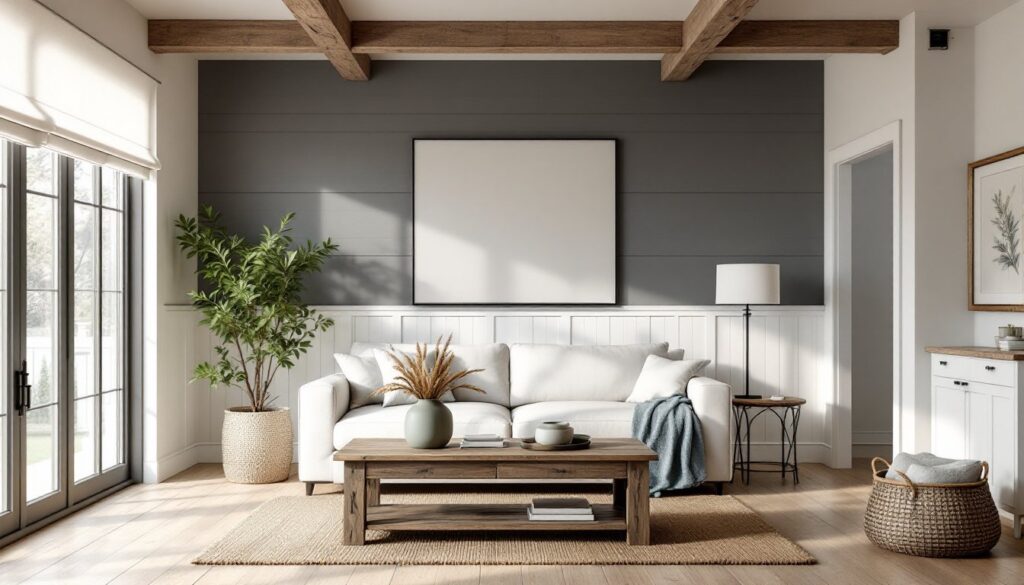
Start with the largest fixed elements: flooring and wall treatment. If replacing flooring, engineered hardwood in oak or hickory offers durability and the look of solid wood without the seasonal movement issues. Widths of 5 to 7 inches work best. For budget-conscious projects, luxury vinyl plank (LVP) in a matte wood-look finish is a practical alternative that handles moisture and foot traffic.
Shiplap or board-and-batten on one accent wall adds dimension without overwhelming the room. Install 1×6 or 1×8 pine boards horizontally for shiplap, using a nickel or dime as a spacer for consistent gaps. Paint in a satin or eggshell finish: flat paint shows scuffs too easily in high-traffic areas.
Furniture should be low-profile and substantial. A linen or canvas slipcovered sofa in white or oatmeal is the anchor piece. Pair it with a reclaimed wood coffee table, look for pieces with visible grain and honest joinery, not distressed finishes that try too hard. Side tables can be metal, wood, or a mix.
Lighting is critical. Swap builder-grade ceiling fixtures for matte black or aged bronze pendants or chandeliers. Styles with exposed bulbs, cage details, or simple geometric shapes fit the aesthetic. If the ceiling height allows, consider adding exposed wood beams, either structural (if the ceiling is being opened up) or decorative beams made from hollow faux wood boxes. Decorative beams should be securely fastened to ceiling joists with construction adhesive and screws.
Keep window treatments minimal. If privacy or light control isn’t a concern, leave windows bare to maximize natural light. Otherwise, use white or linen Roman shades or simple white or black rod-and-ring curtain panels. Avoid fussy valances or patterned fabrics.
Accessories should be functional and few: a woven basket for blankets, a ceramic vase, a small stack of hardcover books. For additional guidance on balancing elements, many homeowners reference interior design strategies that emphasize restraint and intentional placement.
Creating a Welcoming Modern Farmhouse Kitchen
Modern farmhouse kitchens are workhorses. They need to handle meal prep, assignments, and gatherings without looking cluttered. White or off-white cabinetry, typically Shaker-style with inset or overlay doors, is the default, but consider a contrasting island in navy, charcoal, or natural wood.
Countertops should be durable. Quartz in white or light gray with subtle veining mimics marble without the maintenance. Butcher block works for islands or smaller sections but requires regular oiling and isn’t ideal near sinks. Avoid busy granite patterns: they compete with the simplicity of the cabinetry.
Subway tile backsplashes, 3×6 white ceramic tiles in a running bond or herringbone pattern, remain a staple. Use white or light gray grout for a seamless look, or black grout for contrast if the rest of the space is restrained. If going beyond subway, consider larger format tiles (4×12 or 6×12) for a more contemporary feel.
Hardware matters. Choose matte black, oil-rubbed bronze, or brushed brass knobs and pulls. Cup pulls and simple bar pulls are both appropriate: avoid ornate or overly decorative styles. Install pulls on drawers and knobs on cabinet doors for a traditional, functional approach.
Lighting should include task, ambient, and accent sources. Install under-cabinet LED strips for task lighting over counters. Use pendant lights over the island, typically two to three depending on island length, in a finish that matches cabinet hardware. A large fixture over the dining area, such as a wagon wheel chandelier or a cluster of Edison bulbs, adds focal interest. Some inspiration can be found on sites like Country Living, which regularly features practical farmhouse kitchen layouts.
Open shelving is optional but common. Install 1×10 or 1×12 solid wood shelves on heavy-duty brackets (rated for at least 50 lbs per bracket). Display everyday dishes, glassware, or ceramic pitchers. Avoid overcrowding: leave breathing room between items.
Farmhouse sinks, typically 30 to 36 inches wide and made of fireclay or cast iron, are both aesthetic and practical. Pair with a matte black or brushed nickel gooseneck faucet. Ensure the sink base cabinet is specifically designed for an apron-front installation: retrofitting a standard cabinet can compromise structural support.
Modern Farmhouse Bedroom Design Ideas
The modern farmhouse bedroom should feel like a retreat: calm, uncluttered, and grounded in natural materials. Start with the bed. A reclaimed wood or metal frame, either wrought iron or powder-coated steel, sets the tone. Platform beds work well if they have visible joinery or simple lines: avoid upholstered headboards unless they’re linen in a neutral tone.
Bedding should be layered but not fussy. Start with white or natural linen sheets, add a lightweight cotton or linen duvet in white, oatmeal, or soft gray, and finish with textured throw pillows in muted colors and a chunky knit or wool throw at the foot of the bed. Avoid matching bedding sets: mix textures instead.
Walls can be painted white or a soft warm gray. An accent wall in shiplap or board-and-batten behind the bed adds interest without requiring new furniture. If adding shiplap, paint it the same color as the other walls for subtlety, or use a slightly darker shade for definition.
Lighting is layered. A flush-mount or semi-flush ceiling fixture provides ambient light: choose something simple in matte black or aged brass. Bedside lighting can be wall-mounted sconces (freeing up nightstand space) or simple table lamps with linen or metal shades. If installing sconces, mount them 60 to 68 inches from the floor to the center of the fixture for comfortable reading height.
Nightstands don’t need to match. A reclaimed wood side table on one side and a metal stand on the other adds visual interest. Keep surfaces minimal: a lamp, a small plant, and a book or two.
Window treatments should be simple. White linen curtains soften the space and diffuse light. If blackout capability is needed, use roller shades behind the curtains rather than heavy drapes.
Flooring follows the same guidelines as the living room: wide plank wood or wood-look LVP in light to medium tones. Top with a jute or wool area rug in a neutral color, sized so it extends at least 18 inches beyond each side of the bed. Additional styling guidance and visual references can be explored on Decoist, which showcases how minimalist bedroom setups support restful environments.
For storage, consider a freestanding wardrobe or armoire in reclaimed wood or painted white. Built-ins are an option if budget and space allow, but they should be designed with simple Shaker-style doors and minimal hardware to keep the look cohesive. For those new to coordinating finishes and layouts, reviewing interior design for beginners offers foundational advice on proportion and balance.