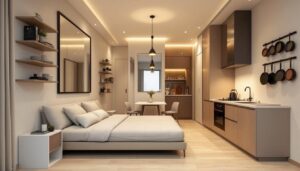
Prospective renters often compare your units to larger apartments and assume they are cramped before they even walk through the door. The good news is that thoughtful design can change that perception. Small apartments lease faster when they feel bright, functional and easy to imagine living in. Strategic staging, smart furniture choices and attention to detail throughout the building can make a compact apartment feel significantly more valuable to renters.
Table of Contents
Toggle1. Use Color to Create Visual Space
Paint is one of the least expensive upgrades you can make and one of the most effective. Soft whites, warm neutrals and light grays reflect more light than dark colors, making walls seem farther apart.
Keeping the ceiling slightly lighter than the walls may also create the illusion of height. Avoid strong accent walls in very small apartments. While dramatic colors can look attractive in photos, they often make compact rooms feel shorter or narrower in person.
Consistency works better. Using a similar light palette throughout the apartment can help the eye move smoothly from one space to another. Mirrors can amplify this effect when placed across from windows or other light sources. A single well-positioned mirror in the living area or entry can visually double the perceived depth of the space.
2. Create a Layout That Feels Functional
Strategic furniture placement is a key interior design tool that can completely change a room's atmosphere, making it look larger and more inviting.
Small apartments feel larger when every square foot serves a purpose. If a prospective renter can immediately understand how they would live in the space, they may be more likely to picture themselves signing a lease.
Stage every room with intention. A small corner can become a work-from-home station. An awkward nook can function as a reading area. In studio apartments, use rugs, lighting and furniture placement to visually separate living, dining and sleeping zones without blocking sightlines.
3. Choose Furniture That Fits the Apartment
One of the most common staging mistakes is using furniture that is too large. Renters need to see that their daily life will fit comfortably inside the apartment. Measure each room to make sure the furniture fits properly.
A loveseat, or just a single statement piece, usually works better in a studio or smaller apartment, whereas a full-size sofa is better suited to a bigger unit. Round dining tables often allow easier circulation than rectangular ones. Leave visible floor space around furniture whenever possible.
Exposed flooring can create a sense of openness because prospects can see the room's boundaries. Furniture with raised legs may be particularly helpful because light and sightlines can pass underneath it.
Multifunctional pieces photograph well and communicate practicality. A dining table that can serve as a workspace or a storage bench near the entry helps renters imagine flexible living arrangements without adding clutter.
4. Reduce Visual Clutter Before Every Showing
Even a beautiful apartment may seem small when it is crowded with objects. Remove excess decor, personal items and unnecessary furniture before photographing or showing the unit. Aim for a staged look that feels lived in but not busy. Storage should be showcased, not hidden.
Adding more closet space in rooms is a good strategy to increase value. For smaller properties, a good approach is to organize closets to make them appear spacious and leave some empty shelves visible. Renters often open closets during tours, and a neatly arranged closet suggests that the apartment offers adequate storage.
5. Focus on What Renters Notice First
Leasing decisions can often begin before a prospect opens the apartment door. The exterior, entryway and common areas create the first emotional impression of the property. A well-maintained building signals that the apartments are also well cared for.
Curb appeal is especially important in competitive rental markets. Clean walkways, trimmed landscaping and fresh paint help prospects feel confident about the property. Even details that seem minor can influence perception. Windows, for example, are a subtle yet key element that can increase your property's curb appeal, and keeping them clean is more important than many people may think.
Clean windows allow more natural light into apartments and make the building appear brighter and better maintained. Once prospects enter the unit, natural light becomes one of your strongest leasing tools.
6. Upgrade Lighting Strategically
Many small apartments rely on a single ceiling fixture, which may create harsh shadows and make corners feel tight. Layered lighting is a relatively inexpensive improvement that has a surprisingly large visual impact.
Use warm LED bulbs consistently throughout the apartment. Add floor lamps, wall sconces or table lamps where possible. Lighting darker corners reduces visual boundaries and creates a more welcoming atmosphere. LED lamps use 75% less energy than traditional incandescent ones, making this upgrade even more practical.
7. Prioritize Kitchen and Bathroom Updates
When budgets are limited, focus on the rooms that renters scrutinize most closely. Kitchens and bathrooms often have an outsized influence on leasing decisions because they affect everyday comfort and convenience.
You do not necessarily need a complete renovation. Replacing cabinet hardware, updating light fixtures, refreshing paint and repairing worn finishes can make a substantial difference. Clean grout, polished fixtures and uncluttered countertops help these spaces appear newer and better maintained.
These improvements also photograph well, which matters because most renters begin their apartment search online. Strong listing photos may increase interest before prospects ever schedule a tour.
8. Appeal to Today's Renters
Modern renters often expect flexibility from their living spaces. Remote work, online shopping and digital lifestyles have changed how people evaluate apartments. Even a small unit can feel highly functional when it accommodates these needs.
A compact desk setup, a charging station or organized storage for packages can demonstrate how the apartment supports contemporary living. These features help prospects see practical value beyond the apartment's size.
Many first-time renters are also paying close attention to affordability and ease of maintenance. Apartments that appear organized, efficient and move-in ready can therefore feel especially attractive to this audience.
Turn Small Spaces Into Fast-Leasing Apartments
Small apartments do not have to compete with larger units on square footage alone. When prospective renters can easily imagine themselves enjoying the space, they are far more likely to schedule a tour, submit an application and sign a lease. Often, the design choices that make a small apartment feel larger are the same ones that help it lease faster.