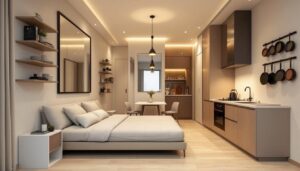
A small living room apartment doesn’t have to feel cramped or sparse. The right design choices can make even a compact 200-square-foot space feel open, inviting, and fully functional. Whether you’re renting or own your place, this guide walks you through seven practical strategies to transform your small living room without requiring structural changes or a designer’s budget. You’ll learn how to choose colors that expand visual space, invest in furniture that earns its footprint, and layer lighting to create depth. These tactics work in studios, one-bedroom apartments, and any tight quarters where every square foot matters.
Table of Contents
ToggleKey Takeaways
- Light color palettes and pale neutrals reflect light and make small living rooms feel larger and more open without requiring expensive renovations.
- Multi-functional furniture like ottomans with storage, nesting tables, and apartment-scale sofas maximize usable space while minimizing visual clutter in compact apartments.
- Vertical storage solutions—floating shelves, tall bookcases, and wall-mounted TVs—draw the eye upward and keep floor space clear for better movement.
- Layered lighting combining ambient, task, and accent sources creates depth and warmth, making small living room spaces feel more inviting than single overhead fixtures.
- Thoughtful furniture arrangement using area rugs to anchor zones and grouping seating around focal points defines purpose without needing walls or structural changes.
- Editing ruthlessly by keeping only functional or joyful items prevents visual noise and transforms small apartments into intentionally designed spaces.
Choose a Light Color Palette to Expand Visual Space
Light colors are your first and most cost-effective tool for making a room feel bigger. Pale neutrals, whites, soft grays, warm beiges, and creams, reflect light and create an airy backdrop that doesn’t press in on you. Paint the walls a soft off-white or light gray, and you’ll notice the room instantly feels less boxed-in.
Here’s the practical bit: you don’t need everything to be boring beige. Introduce visual interest through accent colors on one wall or in textiles. A soft sage green, dusty blue, or warm taupe can add personality without making the space feel smaller. The key is using them strategically, think a single accent wall or via throw pillows and artwork rather than covering all four walls.
Floors matter too. Light wood tones, pale area rugs, and neutral flooring (or keeping existing floors light) keep sightlines open. Dark colors absorb light and create visual weight, which is the opposite of what a small room needs.
Invest in Multi-Functional Furniture That Serves Double Duty
In a small living room, every piece of furniture should justify its footprint. A sofa that seats three and doubles as a guest bed, a coffee table with hidden storage, or an entertainment console that holds media while providing surface space, these are your MVPs.
Look for pieces designed with small spaces in mind. Apartment-scale sofas (72 inches or shorter) fit better than a full sectional. Armless or low-armed seating takes up less visual bulk. Furniture on legs (rather than skirted bases) lets light travel underneath, making the room feel airier.
When shopping, measure your space first. Grab a tape measure and mark off where the sofa will sit, then measure the actual furniture dimensions. You want 18 to 24 inches of walking space on either side. A furniture piece that’s 2 inches too deep will make the difference between livable and claustrophobic.
Ottomans, Nesting Tables, and Storage Benches
Ottomans are small-space heroes. Choose one with a lift-top or with exposed legs (not a chunky, skirted base). They serve as a footrest, extra seating, a coffee table alternative, and often hide storage underneath. Pair it with a narrow side table, and you’ve got flexible surfaces without needing a traditional coffee table that eats floor space.
Nesting tables let you expand surface area when you need it and tuck one inside the other when you don’t. Three or four tables nested together are slimmer than a single bulky coffee table. Keep the top table clear for drinks and remotes: tuck magazines or a throw blanket in the lower tables.
Storage benches at the foot of a sofa or against a wall pull double duty. They offer seating, hide clutter (throw blankets, board games, extra pillows), and keep the room from looking chaotic. Look for benches with a lid, not an open frame. Bonus: many benches are shallow enough to slide in front of a window without blocking light.
Use Vertical Space and Smart Storage Solutions
When floor space is tight, go up. Vertical storage is the reason small rooms don’t devolve into clutter. Instead of stacking books on the floor or draping throws over the sofa, use your walls.
Shelving units that reach toward the ceiling draw the eye upward and create the illusion of height. Tall, narrow bookcases (24 to 30 inches wide) fit in corners or along wall sections without dominating the room. Floating shelves are even sleeker, they don’t need a bulky frame, and they give you display space for plants, books, and decorative objects.
Hang your television or artwork at eye level or slightly above rather than putting a TV on a stand that takes up floor space. Wall-mounted TV brackets are inexpensive and free up the real estate below.
Storage doesn’t have to be boring. Woven baskets under shelves, decorative boxes, and pegboards with hooks turn storage into part of your design. The goal is hidden clutter paired with curated display. Things stored away = room feels bigger. Things displayed with intent = room feels designed, not crammed.
Wall-Mounted Shelves and Built-In Storage Ideas
Floating shelves are simple to install if you locate the studs. Use a stud finder (around $10 to $30) to locate vertical framing, then mount a French cleat or bracket system directly into studs. Never rely on drywall anchors alone for anything heavier than a few pounds.
If you’re renting or can’t drill into walls, leaning shelves and ladder shelves offer tall storage without permanent damage. They’re stackable and move easily when you need to reset the room.
For built-in vibes without renovation, use tall bookcases as a room divider or anchor furniture to a single wall. Stack similar-sized boxes or baskets on shelves to create a visual rhythm and hide odd clutter. Color-code books by spine or organize by size, it looks intentional and calmer than a jumble.
Ceilings are forgotten real estate too. Hanging pockets, overhead racks, or high shelves around a room’s perimeter store seasonal items or décor without touching the walls where you live. This approach works especially well if you’re storing things you use infrequently.
Layer Lighting to Create Depth and Ambiance
Flat, single-source lighting (one overhead fixture) makes small rooms feel smaller and harsher. Layered lighting, combining ambient, task, and accent light, creates depth, warmth, and visual interest.
Start with ambient light. A dimmer-controlled ceiling fixture or a quality track light gives you flexible brightness. Add task lighting near seating: a floor lamp next to your sofa for reading, or a swing-arm lamp mounted on the wall to save table space. Accent lighting comes last: small lamps, string lights, or uplighting behind a plant draw the eye around the room and break up flat walls.
Choose warm-toned bulbs (2700K color temperature) rather than harsh white. They’re more flattering and create a cozy feel that makes tight spaces feel intentional rather than cramped.
Lights on timers or dimmers give you control. You can dial brightness up for guests or down for a relaxed evening. Avoid too many competing light sources, three types (ceiling, task, accent) is plenty. Too many lamps crowded around create visual clutter, the opposite of what you’re after.
Arrange Furniture to Define Zones Without Clutter
In a studio or one-bedroom apartment, your living room might also function as a bedroom, office, or guest space. Thoughtful furniture placement creates zones without walls and keeps everything feeling intentional.
Group furniture facing a focal point, a TV, window, or piece of artwork. This arrangement naturally defines the living space and gives the room purpose. Avoid scattering chairs and tables across the floor: tight clustering makes a room feel bigger, not smaller.
Use an area rug to anchor the living zone. A 5×7 or 6×9 rug under your sofa and coffee table signals “this is the living room” without needing a wall or divider. Rugs also soften hard floors and add warmth (literally and visually).
If your space is doing double duty, position your sofa as a boundary. A sofa with its back to a sleeping area creates a subtle divide. Pair it with a tall bookcase on one side to reinforce the separation without a full wall.
Keep walking paths clear. A narrow hall from entry to bedroom or kitchen should stay open. Stumbling over furniture every time you move through the apartment makes even a spacious place feel cramped. Think traffic flow before you push that chair into a corner.
For small apartment interior design ideas, arrange seating to face inward and create conversation zones. A sofa and two chairs in an L or U shape uses less floor space than furniture spread around the perimeter.
Finally, edit ruthlessly. Every decorative object, book, and piece of furniture should earn its place. If something doesn’t serve a function or bring you joy, it’s taking up real estate and adding visual noise. Small spaces are the enemy of excess, they force you to be intentional, and that intention is what makes them feel designed rather than cramped. Resources like Young House Love offer budget-friendly strategies for room transformations that prioritize function alongside aesthetics. You can also explore practical interior design strategies to create harmony in tight quarters.