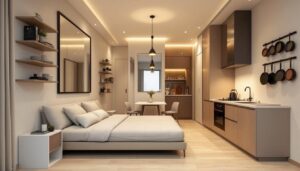
A 400-square-foot studio doesn’t have to feel like a shoebox. With smart layout choices, the right furniture, and a few weekend projects, even the tiniest space can live larger than its square footage suggests. The trick is treating a studio like a puzzle: every piece earns its spot, and nothing sits there just to look pretty. This guide walks through 15 practical small studio apartment decorating ideas grouped into six strategies, from zoning a single room into distinct areas to renter-friendly DIY upgrades that won’t cost a security deposit.
Table of Contents
ToggleKey Takeaways
- Define zones within a single studio room using rugs, curtains, and open shelving to create the visual impression of separate living spaces without building walls.
- Select multi-functional furniture like storage ottomans, Murphy beds, and extendable tables to maximize every square inch and eliminate wasted real estate in small studio apartment decorating.
- Go vertical with floor-to-ceiling shelving, wall-mounted desks, and floating shelves to draw the eye upward and create the illusion of taller ceilings while keeping floor space clear.
- Use light paint colors, strategic mirrors, and layered lighting (ambient, task, and accent) to brighten the space and make a studio feel open and inviting.
- Add personality through textiles, large-scale artwork, and low-maintenance plants like snake plant and pothos to keep the space feeling sophisticated without consuming floor space.
- Implement renter-friendly DIY upgrades like removable wallpaper, Command strips, and LED bulb swaps that enhance your studio without risking your security deposit.
Define Zones to Make One Room Feel Like Many
The single biggest mistake in a studio is treating it as one undifferentiated box. Defining zones, sleep, work, eat, lounge, gives the brain visual cues that mimic a multi-room layout, even when the walls aren’t there.
Start by mapping traffic flow. The bed should sit farthest from the entry, the work zone near natural light, and the lounge area anchored around whatever the focal point is (TV, window, fireplace). A 5×7 area rug under the seating area and a smaller 3×5 under the bed instantly signals two separate rooms.
Use Rugs, Curtains, and Open Shelving as Dividers
For a soft divide, ceiling-mounted curtain tracks let a panel slide closed at bedtime and disappear by day. Mount the track into ceiling joists with toggle bolts if joists aren’t where they need to be, drywall alone won’t hold the weight long-term.
Open shelving units (think 5-foot cube organizers) work as half-walls that still let light pass through. They divide without darkening, and the back side becomes display space for the other zone. For more whole-apartment layout strategy, this breakdown of compact apartment design tips covers floor planning in detail.
Choose Multi-Functional Furniture That Works Twice as Hard
In a studio, every piece needs a second job. A sofa that doesn’t convert to a bed, or an ottoman without storage inside, is wasted real estate.
Look for these workhorses:
- Storage ottomans that double as coffee tables and guest seating
- Murphy beds or wall beds that fold up to reveal a desk or shelving
- Drop-leaf or extendable dining tables that shrink to console depth (around 12 inches) when not in use
- Nesting side tables that tuck together and pull apart for entertaining
- Beds with built-in drawers underneath, roughly 6 cubic feet of hidden storage
Measure doorways and elevators before ordering. A 90-inch sleeper sofa is useless if it can’t clear the entryway. Apartment-friendly furniture brands list assembly dimensions for a reason, use them. The community over at small-space living blogs regularly tours studios that nail this furniture-as-system approach.
Go Vertical With Storage and Wall Decor
When floor space runs out, look up. Most studios have 8 to 9 feet of vertical real estate that sits empty above eye level.
Floor-to-ceiling bookshelves draw the eye upward and make ceilings feel taller. Anchor any unit over 42 inches tall to a stud with an anti-tip strap, it’s code in many jurisdictions and just plain smart. Use a stud finder to locate framing (studs are typically 16 inches on center) before driving anchors.
Other vertical wins:
- Wall-mounted desks that fold down (think 30 inches wide, 18 inches deep)
- Pegboards above the desk or in the kitchen for tools, mugs, or office supplies
- Over-the-door organizers for shoes, pantry items, or toiletries
- Floating shelves mounted 12 to 16 inches apart for a gallery-style display
These tiny studio apartment decorating ideas pull clutter off the floor without adding bulky furniture footprints.
Lighten Up With Color, Mirrors, and Layered Lighting
Light, both literal and visual, makes small spaces breathe. Paint is the cheapest tool in the box. A gallon of quality interior latex covers about 350 to 400 square feet, so one or two gallons can transform an entire studio for under $80 in most markets.
Stick to light, cool-leaning neutrals (soft whites, pale greiges, muted blues) on walls. They reflect more light than warm browns or saturated colors. Paint the ceiling a half-shade lighter than the walls to lift the room visually.
Mirrors are the second multiplier. A large leaning mirror (60 inches or taller) opposite a window doubles the daylight. For renters, lean it against the wall with a felt pad behind to protect paint, no hardware required.
Lighting should layer in three levels:
- Ambient (overhead or floor lamp for general fill)
- Task (desk lamp, reading light by the bed)
- Accent (LED strips under shelves, picture lights, plug-in sconces)
This is straight-up basic studio apartment interior ideas territory, but skipping the layered approach is why so many studios feel like dorm rooms.
Add Personality Through Textiles, Art, and Greenery
Once the bones are right, personality comes from soft layers. Textiles do heavy lifting: a chunky throw on the bed, linen curtains puddling slightly at the floor, and two or three pillows in varied textures (boucle, velvet, cotton weave) keep a small space from reading flat.
Art should go big. A single 36×48-inch piece reads more sophisticated than a scattered cluster of 8x10s. Hang the center of any artwork at 57 to 60 inches from the floor, standard gallery height.
Greenery adds life without consuming floor space. Low-light champions for studios include:
- Snake plant (tolerates neglect, filters air)
- Pothos (trails from a shelf, propagates easily)
- ZZ plant (handles drought and dim corners)
Skip anything that needs direct south-facing light unless the studio actually has it. Browsing real apartment room decorating ideas on sites like budget renovation diaries shows how personality compounds when textiles and art work together.
Budget-Friendly DIY Upgrades for Renters
Renters don’t have to live with builder-grade beige. Most upgrades below come off cleanly at move-out.
Peel-and-stick projects:
- Removable wallpaper on an accent wall (a single 20-square-foot roll covers most feature walls)
- Vinyl floor tiles over ugly linoleum in kitchens or bathrooms
- Contact paper on dated countertops or cabinet fronts
No-damage hardware:
Command strips hold up to 16 pounds and remove cleanly. For heavier art, ask the landlord about small nail holes, most allow them if patched at move-out with a tub of lightweight spackle and a putty knife.
IKEA hacks:
A basic LACK shelf or KALLAX cube can be customized with stain, new pulls, or fluted trim glued to the front. The DIY community at creative furniture hacks catalogs hundreds of these mods. Even a $40 dresser can look custom with $15 in materials and an afternoon.
Lighting swap:
Replace harsh overhead bulbs with 2700K to 3000K LED bulbs (warm white) for a softer cast. Keep the original bulbs in a bag for move-out day.
For more apartment-specific project inspiration, this guide on maximizing tight retail spaces translates surprisingly well to residential studios, the principles of zoning and vertical use are nearly identical.
Final Thoughts
Studio living rewards intentionality. Define the zones first, choose furniture that pulls double duty, build vertically, and layer in light before worrying about throw pillows. Tackle one strategy per weekend rather than trying to overhaul everything at once, momentum beats perfection. With a tape measure, a stud finder, and a willingness to edit ruthlessly, a 400-square-foot studio can feel like home, not a holding pattern.