
Restaurant design isn’t just about aesthetics, it’s about creating an environment that supports service flow, encourages repeat visits, and reflects the brand. Modern restaurant interiors balance form with function, using clean design principles, durable materials, and strategic lighting to create memorable dining experiences. Whether renovating a bistro or planning a new concept from scratch, understanding current design trends and practical implementation strategies makes the difference between a space that looks good in renderings and one that actually works.
Table of Contents
ToggleKey Takeaways
- Modern restaurant interior design balances clean lines, durable materials, and strategic lighting to create functional spaces that encourage repeat visits and reflect brand identity.
- Material durability is critical: polished concrete, large-format porcelain tile, and fiberglass-reinforced panels withstand restaurant wear while maintaining aesthetic appeal.
- Layered lighting with separate zones for ambient, task, and accent light dramatically influences guest experience, food perception, and the ability to transition from lunch to dinner service.
- Neutral color palettes anchored with whites, grays, and warm beiges paired with 20–30% accent colors create versatility and help establish atmosphere without overwhelming the space.
- Furniture layout and seating dimensions directly impact operational efficiency; optimal clearances of 44–48 inches between occupied chairs and proper table sizing ensure comfortable service flow.
- Test all design elements at full scale in the actual space before final implementation, as paint colors, lighting, and furniture comfort shift dramatically under real-world conditions and usage.
What Defines Modern Restaurant Interior Design?
Modern restaurant design emphasizes simplicity, functionality, and intentional use of space. It strips away unnecessary ornamentation in favor of clean lines, neutral palettes with strategic color accents, and furnishings that serve both practical and aesthetic purposes.
The style originated from mid-century modernism but has evolved to incorporate sustainable materials, flexible layouts, and technology integration. Today’s modern restaurants often feature open kitchens, mixed seating arrangements, and acoustical treatments that weren’t priorities a decade ago.
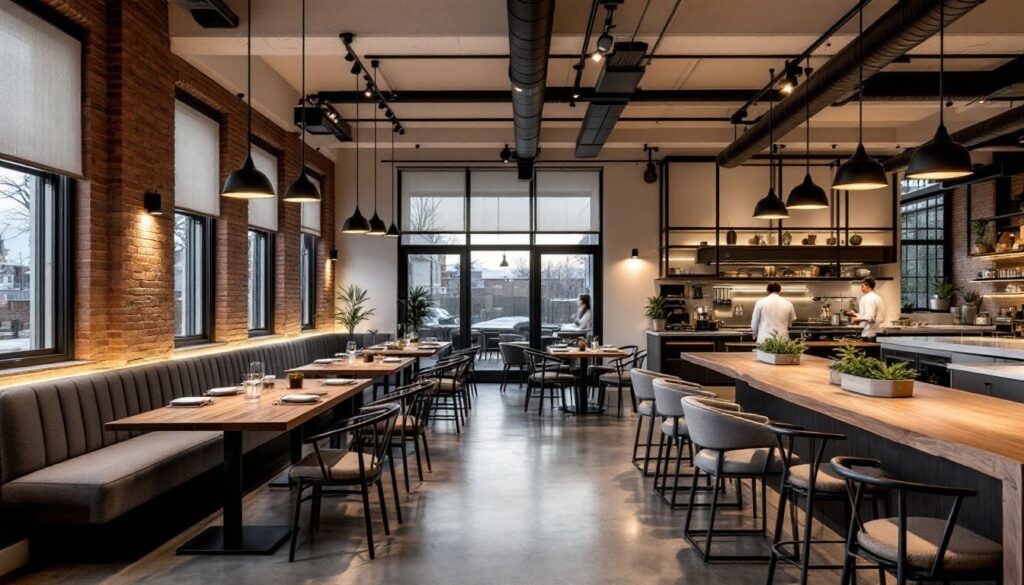
Unlike traditional or themed restaurants that rely on heavy décor, modern spaces let architecture, materials, and lighting do the visual work. Concrete floors, exposed ductwork, and visible steel beams aren’t flaws to hide, they’re design elements that add industrial warmth when paired with wood accents and soft textiles.
This approach works across restaurant types: fast-casual concepts benefit from the efficiency and cleanability, while upscale dining establishments use the same principles with premium material selections. The key is consistency, every element should feel purposeful rather than added as an afterthought.
Key Elements of Contemporary Restaurant Aesthetics
Minimalist Design and Clean Lines
Minimalism in restaurant design doesn’t mean sterile or cold, it means deliberate. Each piece of furniture, every fixture, and all decorative elements should justify their presence through function or visual impact.
Wall treatments stay simple: smooth plaster, painted drywall in neutral tones, or natural materials like reclaimed wood planks or stone veneer. Avoid busy patterns or multiple wall finishes in one space. If adding texture, commit to one material per zone, shiplap in the entry, smooth concrete in the dining area, acoustic panels near high-traffic zones.
Built-in seating, such as banquettes, maximizes space while creating clean sight lines. They’re typically 18 inches deep with backs that rise 36 to 42 inches from the floor, depending on whether you’re designing for counter-height or standard dining tables.
Ceiling design matters more than many first-timers realize. Exposed structure works if the bones are clean, MEP (mechanical, electrical, plumbing) lines should be organized and painted a cohesive color, usually matte black or the ceiling color. If hiding ductwork, use a suspended grid ceiling with acoustic tiles rated for NRC 0.70 or higher to manage noise in active dining areas.
Smart Material Choices for Durability and Style
Restaurants take a beating. Spills, heavy foot traffic, and constant cleaning demand materials that look good under pressure. Applying principles from space planning strategies helps balance beauty with resilience.
Flooring: Polished concrete is affordable and nearly indestructible, though it requires proper sealing, two coats of penetrating sealer followed by a topical finish. Reapply topical sealer annually in high-traffic zones. Large-format porcelain tile (24×24 inches or larger) offers similar durability with more color options and is easier on staff who stand all shift. Avoid natural stone unless you’re willing to maintain it, wine and citrus will etch marble and limestone.
Wall surfaces: Wherever splatter is a risk, install FRP (fiberglass-reinforced panels) behind service stations and prep areas. They’re code-compliant in most jurisdictions and far easier to maintain than paint or tile. In dining areas, consider a wainscot of 1×4 or 1×6 tongue-and-groove pine or poplar, installed vertically and finished with satin-sheen paint. It hides chair-rail damage while adding texture.
Countertops and tables: Laminate has come a long way, high-pressure laminate with a matte finish looks remarkably like natural materials at a fraction of the cost. For bar tops or high-contact surfaces, epoxy resin or quartz composite withstands heat and abrasion better than butcher block or tile. Avoid glass tabletops, they photograph well but show every fingerprint and require constant wiping.
Consider maintenance intervals when selecting materials. Dark grout shows stains: go with medium gray. Brushed or matte metal finishes hide smudges better than polished chrome.
Color Palettes That Create the Right Atmosphere
Color sets mood before a guest reads the menu. Modern restaurant palettes typically anchor with neutrals, whites, grays, taupes, or warm beiges, and layer in one or two accent colors tied to the brand or cuisine.
Neutral bases create versatility. Warm grays (those with slight brown or beige undertones) feel inviting without the starkness of cool gray. Sherwin-Williams Agreeable Gray (SW 7029) or Benjamin Moore Revere Pewter (HC-172) are industry go-tos for walls because they shift with lighting throughout the day. Pairing these with white trim and ceilings keeps spaces feeling open.
Accent colors should reflect brand personality. Earthy greens and terracottas suit farm-to-table concepts. Deep navy or charcoal works for upscale establishments. Warmer tones, burnt orange, mustard, rust, add energy to casual spots. Limit accent colors to 20-30% of visible surfaces: one accent wall, upholstery fabric, or a series of pendant lights.
Natural wood tones count as a neutral and add warmth that painted surfaces can’t replicate. Many restaurants with predominantly current design trends use white oak or walnut for tabletops, shelving, or feature walls. The grain and variation provide visual interest without adding competing colors.
Test paint samples in the actual space before committing. Paint at least a 2×2-foot section on different walls and observe them at various times, morning light, evening artificial light, and during service with dimmed ambiance. Colors shift dramatically under different lighting conditions, and a shade that looks perfect at noon may read completely different under warm LED bulbs at night.
Lighting Strategies for Modern Restaurant Spaces
Lighting does more work than any other design element. It defines zones, influences perceived food quality, affects how long guests linger, and shapes the overall atmosphere. Modern restaurants layer multiple light sources rather than relying on a single overhead solution.
Ambient lighting provides base illumination. Recessed LED downlights spaced on a 4-to-6-foot grid deliver even coverage without creating harsh shadows. Choose 2700K to 3000K color temperature for warm light that flatters skin tones and food. Dimming capability is essential, install drivers rated for 0-10V dimming or use smart controls that let you program scenes for lunch versus dinner service.
Task lighting focuses on specific zones: the bar, host stand, and any areas where staff need to read or prep. Under-cabinet LED strips or adjustable track fixtures work well. Avoid putting task lighting directly over dining tables unless it’s adjustable, guests don’t want to feel like they’re under interrogation.
Accent lighting creates visual interest and highlights architectural features or artwork. Picture lights, wall-wash fixtures, or narrow-beam track heads draw attention to focal points. Many design publications like Architectural Digest showcase restaurants that use statement pendant lights as sculptural elements, hung at varying heights to add dimension.
Pendant lights over tables or bars should hang so the bottom of the fixture is 30 to 36 inches above the surface. If the ceiling height allows, stagger fixture heights slightly, it looks more intentional than perfectly uniform installation and helps with sight lines.
Natural light is valuable but tricky. Large windows facing west create glare and heat gain during afternoon service. Use sheer roller shades, exterior awnings, or UV-filtering window film. North-facing windows provide consistent, even light throughout the day with less temperature swing.
Wire all lighting on separate circuits or zones. At minimum, create three zones: dining area, bar/lounge, and back of house. This allows flexible control as service transitions from day to night. Many restaurateurs underestimate the impact of being able to adjust lighting, it’s cheaper than renovating and instantly changes how the space feels.
Furniture Selection and Layout Optimization
Furniture in a restaurant serves two masters: guest comfort and operational efficiency. The wrong chairs or a poorly planned layout slows service, reduces capacity, and frustrates both staff and diners.
Seating dimensions: Dining chairs should have a seat height of 18 inches for standard tables (28 to 30 inches high) and 24 to 26 inches for counter-height tables (36 inches high). Seat depth matters, 16 to 18 inches accommodates most adults comfortably without encouraging guests to linger too long in high-turnover concepts. Upholstered seats add comfort but require commercial-grade fabric (100,000+ double rubs Wyzenbeek rating) and regular cleaning.
Table sizing: Allow 24 inches of table width per person for comfortable dining. A 30×48-inch table seats four: 36×60 inches comfortably fits six. Round tables are space-efficient for smaller groups but limit flexibility. Square and rectangular tops can be pushed together for larger parties, and they fit against walls during slow periods to free up circulation space.
Clearances: The International Building Code (IBC) requires 36-inch-wide aisles as accessible routes, but functional restaurant circulation needs 44 to 48 inches between occupied chairs for servers to pass comfortably. Main aisles from entry to dining areas should be at least 60 inches to prevent bottlenecks.
Layout strategies: Start by placing fixed elements, kitchen doors, restrooms, host stand, then build seating zones around circulation paths. Avoid placing tables directly in sight lines from the entry to the kitchen: guests don’t want to watch expediting chaos. Create variety with a mix of two-tops, four-tops, communal tables, and banquette seating. Tools highlighted at Design Milk often help visualize how different furniture arrangements affect flow.
Banquettes maximize seating along walls and are more space-efficient than freestanding chairs. Build them 18 inches deep with a slightly angled back (about 5 degrees from vertical) for comfort. Use medium-density foam (around 2.0 pounds per cubic foot) covered with vinyl or performance fabric that can handle spills.
Bar seating pulls double duty, solo diners and those waiting for tables gravitate there. Space bar stools 24 to 30 inches on center depending on whether they have arms. Backless stools take up less room but are less comfortable for long sits. Many contemporary spaces detailed on Decoist incorporate bar seating as a design statement with live-edge wood or waterfall-edge counters.
Material selection: Commercial furniture takes abuse. Solid wood chairs are durable but heavy and expensive. Metal frames with wood or upholstered seats offer better value and hold up well. Avoid anything with sharp corners at knee or shin height, guests will remember.
Don’t forget storage. Built-in benches with lift seats, service stations with locking cabinets, and wall-mounted charging stations for devices all improve functionality without cluttering the design. Incorporating lessons from design techniques ensures that practical storage doesn’t compromise the aesthetic.
Finally, test furniture at full scale before ordering in bulk. Sit in it, scoot chairs in and out, wipe down surfaces. Order samples and live with them for a week. What feels fine for ten minutes may be uncomfortable after an hour-long meal. The wrong furniture is expensive to replace and impossible to ignore once service starts.