
Opening a small flower shop means turning every square foot into working space that showcases blooms, houses inventory, and supports workflow, all while creating an inviting atmosphere. Unlike larger retail spaces, compact footprints demand intentional planning where <a href="https://wintersummerinn.com/interior-design-tools/”>design choices affect both customer experience and daily operations. The right layout, lighting, and display solutions can transform a cramped storefront into an efficient, charming destination that draws customers in and keeps them browsing.
Table of Contents
ToggleKey Takeaways
- Small flower shop interior design directly impacts revenue per square foot by maximizing display capacity, reducing labor costs, and guiding customer flow naturally toward impulse purchases.
- Vertical displays, tiered tables, and rolling carts multiply usable retail space without expanding the physical footprint.
- Strategic lighting with 5000K–6500K LED bulbs, combined with natural light and accent spotlights, showcases flowers vibrantly and creates an inviting atmosphere.
- Workstations positioned near coolers and water access, paired with efficient storage solutions, reduce staff movement and assembly time.
- Water-resistant flooring like luxury vinyl plank and accessible layout design (36-inch routes, knee-space counters) ensure durability and compliance while enhancing the customer experience.
- Weekly refreshed window displays and subtle branding elements establish visual identity that justifies pricing and builds customer loyalty in competitive markets.
Why Smart Interior Design Matters for Small Flower Shops
Small retail spaces operate under tight constraints. A flower shop’s design directly impacts how many arrangements fit on display, how quickly staff can assemble orders, and whether customers feel comfortable enough to linger. Poor layout choices create bottlenecks, limit inventory visibility, and waste premium square footage.
Thoughtful design increases revenue per square foot by maximizing display capacity without overcrowding. It also reduces labor costs, when coolers, workstations, and supplies occupy logical positions, staff spend less time hunting for ribbon or walking across the room for foam. Customer flow matters, too. A well-planned shop guides visitors past seasonal displays and impulse buys naturally, boosting average transaction values.
Beyond function, interior design sets brand identity. Color schemes, fixture choices, and lighting tell customers whether they’ve entered a modern studio or a rustic cottage-style shop. That visual story builds loyalty and justifies pricing in competitive markets.
Layout and Space Planning Essentials
Start with a scaled floor plan showing structural elements, walls, doors, windows, electrical outlets, and plumbing access. Mark non-negotiable zones: customer entrance, checkout counter, and walk-in cooler (if applicable). The cooler often anchors the layout since it requires dedicated electrical and drainage.
Customer flow should follow a clear path from entry to checkout. A race-track layout works well in narrow spaces, customers enter, follow a defined route along perimeter displays, and exit through the checkout. This keeps traffic moving and ensures visibility for all product zones.
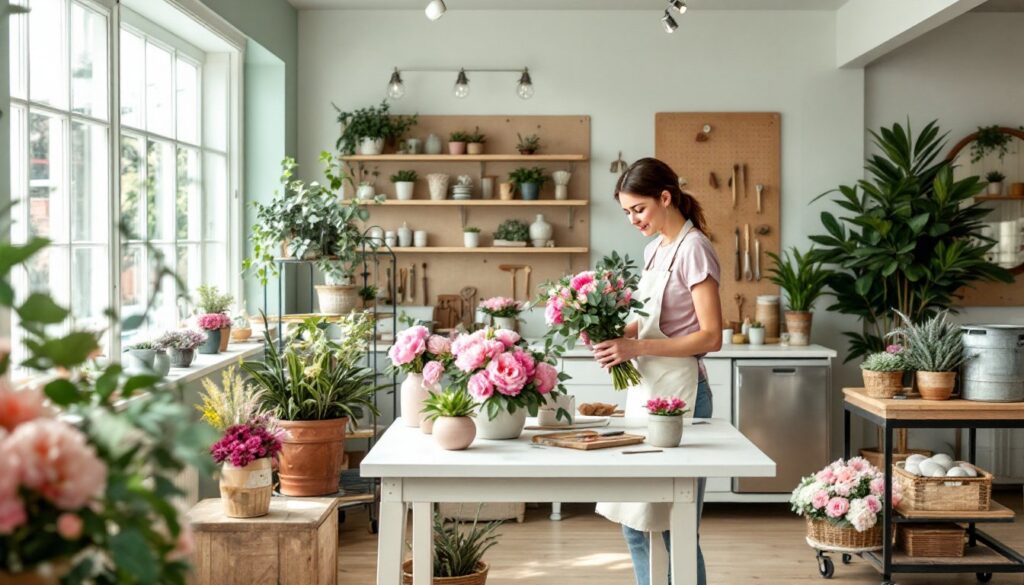
Workstations belong in back-of-house areas or behind counters where they’re accessible but out of sight. A 4×6-foot workbench provides enough surface for bouquet assembly, with storage underneath for floral foam, shears, and wire. Position this near the cooler to minimize steps when pulling fresh stems.
Avoid blocking windows with tall fixtures. Natural light draws foot traffic and showcases flowers better than artificial sources. Keep sightlines open so customers can see the entire shop from the doorway, which reduces intimidation in tight quarters.
Consider ADA compliance even in small spaces. The Americans with Disabilities Act requires 36-inch-wide accessible routes and adequate turning radius for wheelchairs. Local building codes vary, so verify requirements with your municipality before finalizing the layout. Many tested design strategies emphasize accessibility as both a legal and practical concern.
Choosing the Right Color Palette and Lighting
Wall color affects perceived space and product visibility. White or light neutrals (soft gray, beige, pale sage) reflect light and make small shops feel larger. They also provide a clean backdrop that lets colorful blooms stand out. Dark walls add drama but shrink visual space, reserve bold colors for accent walls or small sections.
Ceiling paint matters more than most realize. Paint ceilings one shade lighter than walls, or use bright white to increase perceived height. Avoid high-gloss finishes, which create harsh reflections under retail lighting.
Lighting determines whether flowers look vibrant or washed out. Natural light is ideal but inconsistent. Supplement with 5000K–6500K LED bulbs (daylight spectrum) that render colors accurately without the heat of halogen. Track lighting offers flexibility, aim fixtures at display zones and adjust as seasonal inventory changes.
Install ambient lighting (overhead fixtures) for general illumination, plus accent lighting (spotlights, LED strips) to highlight featured arrangements or window displays. Dimmer switches let you adjust mood for events or evening hours.
Task lighting belongs over workstations. A clamp-on LED workbench light provides focused illumination for detail work without adding electrical complexity. Position it to avoid shadows across your dominant hand.
Avoid fluorescent tubes, they flicker, distort colors, and feel institutional. If budget is tight, prioritize LED upgrades in customer-facing areas first. Modern design techniques treat lighting as a functional tool, not an afterthought.
Display Solutions That Maximize Visual Impact
Vertical displays multiply usable space. Wall-mounted shelving (10–12 inches deep) holds bud vases, potted plants, and gift items without consuming floor area. Install brackets rated for 50 pounds per linear foot to support heavier ceramic containers. Floating shelves look modern: metal grid panels offer flexibility for adjustable hooks and baskets.
Tiered display tables create multiple eye levels in a small footprint. A 3-tier plant stand (roughly 24×18 inches) showcases nine arrangements in the space normally occupied by three. Look for powder-coated steel or wrought iron, wood swells and warps in humid floral environments.
Rolling carts serve double duty. They display product during business hours and roll aside for deliveries or floor cleaning. Commercial-grade carts with locking casters prevent accidental movement. Stainless steel models resist water damage and wipe clean easily.
Window displays act as 24/7 advertising. Refresh them weekly to signal new inventory and seasonal shifts. Platforms or risers add dimension, a simple plywood box (12–18 inches tall) draped with fabric creates height variation for under $20 in materials. Retailers focused on small space solutions often use similar elevation tactics in compact environments.
Hanging displays exploit unused ceiling space. Install ceiling hooks or a pot rack to suspend arrangements, dried florals, or greenery. Verify ceiling structure first, drywall anchors work for lightweight items (under 10 pounds), but heavier displays require screws into joists or crossbeams.
Price tags and signage should stay minimal and consistent. Acrylic card holders (2×3 inches) clip onto buckets or shelves without visual clutter. Chalkboard paint on wall sections lets you list daily specials or care instructions without permanent signage.
Storage and Workstation Design for Efficiency
Hidden storage keeps shops looking uncluttered. Below-counter cabinets with adjustable shelves hold ribbons, vases, floral tape, and tools within arm’s reach. Measure your tallest vase before setting shelf heights, you’ll avoid wasted vertical space.
Pegboard walls behind workstations organize frequently used tools. Hang shears, wire cutters, and spray bottles on hooks for immediate access. Paint pegboard to match your color scheme: natural wood looks unfinished in professional settings.
Open shelving in back-of-house areas stores bulk supplies (foam bricks, buckets, wrapping paper). Use clear plastic bins with labels so staff can identify contents at a glance. Stack bins on wire shelving units (18×36 inches or 24×48 inches) rated for 500–800 pounds per shelf. These units assemble without tools and adjust in 1-inch increments.
Workbench height affects comfort during long shifts. Standard 36-inch counter height works for most tasks, but consider a 42-inch raised section for standing work that reduces back strain. A rubber anti-fatigue mat (¾-inch thick) eases pressure on feet and knees during assembly work.
Water access is non-negotiable. If plumbing isn’t in place, budget for a utility sink installation, it requires drain lines, supply lines, and potentially a floor drain to handle overflow. Hire a licensed plumber for this work: DIY plumbing in commercial spaces often violates code and voids insurance.
Cooler organization extends product life. Designate zones by flower type or order status (incoming stock, staged arrangements, customer pickups). Use waterproof labels and stackable crates to keep stems upright. Many established interior design approaches prioritize workflow logic over aesthetics in utilitarian zones.
Flooring, Fixtures, and Finishing Touches
Flooring must withstand constant moisture. Luxury vinyl plank (LVP) offers water resistance, durability, and a wood-look aesthetic. It installs over most existing floors and costs $2–$5 per square foot (materials only). Avoid laminate, it swells when wet. Sealed concrete works in industrial-style shops and handles water without damage, though it’s cold and hard underfoot.
Slip resistance matters. Wet floors cause falls. Choose flooring with a 0.6 or higher coefficient of friction (COF), this rating indicates adequate traction when wet. Commercial-grade ceramic tile with textured finish also works but requires professional installation and grouted seams that trap dirt.
Checkout counters should be 36–42 inches high with knee space underneath for accessibility. A 4-foot-wide counter provides room for a register, credit card terminal, and gift-wrapping supplies. Build counters from ¾-inch plywood with a water-resistant laminate top, easy to clean and budget-friendly at around $150–$300 in materials. Add a toe kick (recessed base) so customers can step close without bumping knees.
Mirrors expand perceived space. A large wall mirror (4×6 feet) opposite the entrance doubles visual depth. Secure it with mirror clips and construction adhesive rated for the weight. Check local codes, some jurisdictions require safety backing on commercial mirrors.
Greenery and living plants enhance flower shops naturally. Wall-mounted planters or a living wall system add texture without floor space. Choose low-maintenance species (pothos, philodendron) that tolerate variable light. Plant-focused resources like Gardenista offer species recommendations for indoor retail environments.
Scent matters. Avoid artificial air fresheners, they clash with natural floral scents. Instead, use essential oil diffusers with subtle blends (eucalyptus, lavender) or simply let fresh flowers do the work.
Signage and branding tie the space together. A dimensional logo sign (routed wood, laser-cut metal) behind the counter reinforces brand identity. Keep fonts readable from the sidewalk if wall space faces the street. Hire a sign professional for exterior work, permits and zoning regulations often govern commercial signage size and placement.
Conclusion
A small flower shop’s interior design either supports or sabotages daily operations. Thoughtful layout planning, strategic lighting, and smart storage turn tight quarters into efficient, profitable retail spaces. Prioritize durability in materials, accessibility in layout, and flexibility in displays. When constraints force creativity, small footprints often deliver more charm per square foot than sprawling competitors.