
Your home is where you make memories, and it should remain a place of comfort and security for a lifetime. However, as you get older, true peace of mind comes not just from the love within its walls, but also from the reliability of the systems that hold it all together.
A system failure can put your safety at risk. Explore the various ways you can be proactive and design a home that is prepared for equipment problems, turning a potential crisis into a minor, manageable inconvenience.
Table of Contents
ToggleWhy Typical Accessibility Features Aren’t Enough Anymore
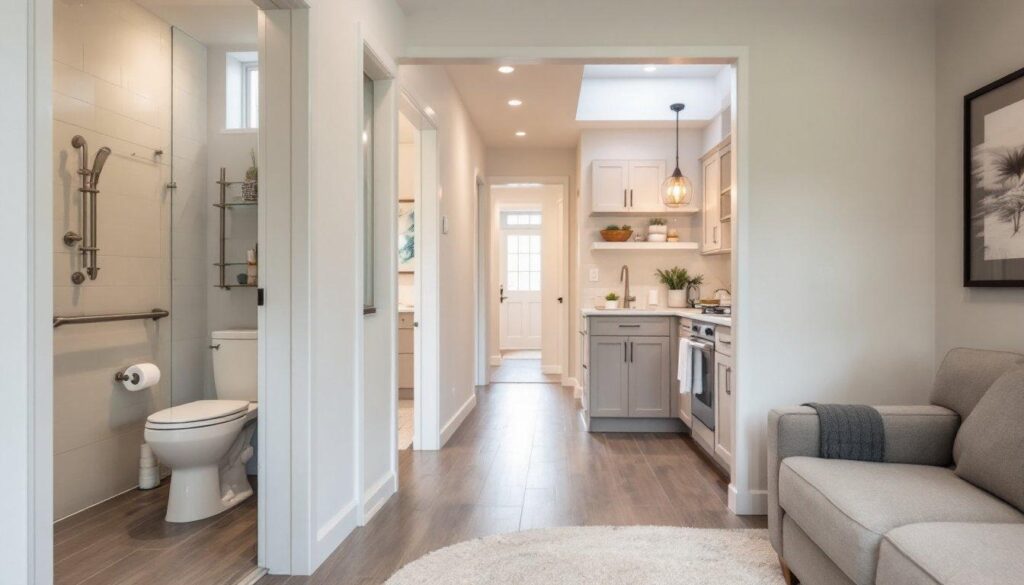
When you think of an accessible, age-friendly home, you might picture an entrance with a ramp, walk-in showers, nonslip treads and grab bars in high-risk areas. However, in reality, these features become less effective during emergencies.
For instance, when the power goes out, grab bars are much more difficult to spot, and ramps become treacherous. Unlit pathways increase the risk of a misstep or rolling off the edge. Similarly, when the heat fails during a blizzard, even the best physical accessibility features provide little comfort in a dangerously cold and unsafe environment.
Building a Resilient Foundation of Power and Climate
Instead of focusing solely on traditional accessibility features, you should prioritize system resilience. Proactive upgrades help your home stay safe and functional during an emergency.
This kind of resilience lets technology work together with your traditional accessibility features, so you can continue living a comfortable and safe life even in the most unexpected situations. It also gives you and your family the peace of mind that, no matter what happens outside, you are all secure at home together.
Ensuring Uninterrupted Power for Health and Safety
Power is one of the most important foundations of a modern home. Without it, every comfort and accessibility feature becomes secondary. You start sweating or freezing without your HVAC system, and you can’t navigate your living room in the dark. Your home’s essential systems, from a dialysis machine that stops midcycle to an oxygen concentrator that fails, suddenly go silent.
To ensure that you never have to live through an emergency without power, it helps to understand what’s actually at stake. Research on the link between power outages and hospitalization risk shows that older adults who depend on electricity-powered medical equipment can face life-threatening complications, especially if they can't evacuate on their own. For example, a motorized stairlift can trap someone halfway up the stairs, or a CPAP machine can go silent overnight without warning.
Fortunately, backup power no longer means a noisy generator in the driveway. Modern solar power generators can be properly sized, charged and matched to your specific devices and expected outage duration. This enables them to keep essential medical equipment, lighting and communication tools running during emergencies.
Maintaining a Stable Indoor Climate
A stable indoor temperature is essential for health. That's why giving your HVAC system regular attention matters more as you age, since a system left unchecked is more likely to fail when you need it most.
The easiest way to prevent a breakdown is also the simplest. Start by following a maintenance checklist that includes swapping out dirty air filters monthly to increase efficiency. From there, schedule annual preseason checkups so a technician can catch small issues before they turn into full failures.
Securing Mechanical and Plumbing Systems
Beyond power and climate, some of the most dangerous failures come from mechanical and plumbing systems that operate under real physical pressure. This includes things like garage door springs, pipes and water heaters.
Fortifying High-Tension Entry Points
The single largest, heaviest moving object in most homes is the garage door. A standard door can weigh upward of 400 pounds, held in check entirely by springs wound under extreme tension. When a spring gives out, that balance disappears instantly.
A malfunctioning garage door can drop suddenly without warning. It’s important to learn the signs of a broken spring before that happens, such as a door that appears crooked when partially opened. A failing system can also trap a car inside during an emergency evacuation or crush anything caught beneath it, dangers that become more serious when slower reflexes make it harder to react in time.
Mitigating Internal Water Hazards
The symptoms of a failing plumbing system can be hard to spot. A burst pipe or failing water heater can flood a floor in minutes. For a senior with decreased mobility or balance, even a half-inch of unexpected water on tile or hardwood is a fall waiting to happen.
A complete home emergency plan should treat plumbing failures as seriously as storms or power outages. Federal guidance encourages every household to create a kit of emergency necessities that includes water, nonperishable food and medications, so a sudden failure never catches you unprepared.
Proactive Design for Any Possibilities
There’s a real difference between fixing what’s broken and building a home that’s ready before anything breaks. A reactive approach waits for a spring to snap or the power to fail before responding, but a proactive one designs around those possibilities from the start.
Give your home and family the confidence they need to feel secure and prepared by designing a safe space that’s ready for whatever may come.