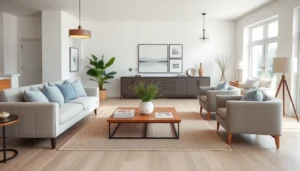
Interior design for beginners doesn’t have to feel overwhelming. With a few core principles and some practical tips, anyone can transform a room from cluttered to cohesive. This guide breaks down the essentials, color, layout, lighting, and more, so new designers can start making confident choices today. Whether decorating a first apartment or refreshing a tired living room, these foundational skills will serve as a launching pad for creating spaces that look intentional and feel like home.
Table of Contents
ToggleKey Takeaways
- Interior design for beginners starts with mastering five core principles: balance, proportion, rhythm, emphasis, and contrast.
- Use the 60-30-10 color rule to create a cohesive palette—60% dominant color, 30% secondary, and 10% accent.
- Always measure your room and plan furniture layout before purchasing to ensure proper scale and traffic flow.
- Layer your lighting with ambient, task, and accent sources to add depth and functionality to any space.
- Avoid common mistakes like pushing furniture against walls, hanging artwork too high, or buying everything from one store.
- Build your room over time with mixed styles and textures to create a space that feels personal, not generic.
Understanding the Basic Principles of Design
Every well-designed room relies on a handful of core principles. Interior design for beginners starts here, because these concepts act as guardrails for every decision that follows.
Balance refers to how visual weight distributes across a space. Symmetrical balance places matching items on either side of a center point, think two identical lamps flanking a sofa. Asymmetrical balance mixes different objects of similar visual weight, creating a more relaxed feel.
Proportion and scale deal with size relationships. A massive sectional in a tiny room will swallow the space. A delicate side table next to an oversized armchair will look lost. Matching furniture scale to room size keeps everything in harmony.
Rhythm guides the eye through a room. Repeating colors, patterns, or shapes creates flow. For example, using the same shade of blue in throw pillows, artwork, and a vase ties a room together without feeling forced.
Emphasis gives a room a focal point, a fireplace, a bold piece of art, or a statement headboard. Without emphasis, spaces feel flat and forgettable.
Contrast adds interest. Pairing smooth textures with rough ones, or light colors with dark, prevents a room from becoming visually monotonous.
Beginners who internalize these principles will find that interior design decisions become less about guessing and more about applying a logical framework.
Choosing a Color Palette That Works
Color sets the mood of any room. For those new to interior design for beginners, selecting a cohesive palette can feel tricky, but a simple formula makes it easier.
Start with the 60-30-10 rule. Sixty percent of the room should feature a dominant color (usually walls and large furniture). Thirty percent goes to a secondary color (curtains, accent chairs, rugs). The remaining ten percent is reserved for accent colors (pillows, artwork, decorative objects).
Neutral palettes, whites, grays, beiges, offer flexibility and timelessness. They also make it easy to swap accent colors seasonally without repainting walls.
For bolder choices, a color wheel helps. Complementary colors (opposites on the wheel, like blue and orange) create energy. Analogous colors (neighbors on the wheel, like green, teal, and blue) feel calm and unified.
Temperature matters too. Warm tones, reds, oranges, yellows, make spaces feel cozy and intimate. Cool tones, blues, greens, purples, create a sense of calm and openness.
One practical tip: pull color inspiration from a piece you already love. A favorite rug, painting, or throw blanket can serve as a ready-made palette. This approach takes the guesswork out of interior design for beginners and ensures colors work well together from the start.
Furniture Arrangement and Space Planning
Furniture arrangement affects how a room functions and feels. Poor layout makes spaces cramped or awkward. Good layout makes them inviting and practical.
First, measure the room. Sketch a simple floor plan or use a free online tool. Knowing exact dimensions prevents buying furniture that doesn’t fit.
Next, define the room’s purpose. A living room meant for conversation needs seating arranged to face each other. A home office requires a desk positioned for focus, ideally near natural light.
Traffic flow is critical. Leave clear pathways, about 30 to 36 inches wide, between furniture. People shouldn’t have to squeeze past a coffee table or sidestep a chair to move through the space.
Float furniture away from walls when possible. Pulling a sofa a few inches into the room creates a more intimate seating area and makes spaces feel larger, not smaller.
Anchor seating arrangements with a rug large enough for all furniture legs to rest on, or at least the front legs. This grounds the grouping and defines the zone.
For interior design for beginners, starting with one focal point simplifies arrangement. Orient the main seating toward that point, whether it’s a TV, fireplace, or window with a view. Everything else falls into place from there.
Incorporating Lighting and Accessories
Lighting transforms a room. A single overhead fixture rarely does a space justice. Layered lighting, a mix of ambient, task, and accent sources, adds depth and function.
Ambient lighting provides overall illumination. Ceiling fixtures, recessed lights, and chandeliers fall into this category.
Task lighting serves specific activities. Desk lamps, reading lights, and under-cabinet kitchen lights help with focused work.
Accent lighting highlights features. Picture lights, uplights, and LED strips draw attention to artwork, architectural details, or shelving.
Dimmers offer flexibility. They let the same room shift from bright and energizing to soft and relaxed depending on the time of day or activity.
Accessories bring personality. But restraint matters. Too many small objects create clutter. Group items in odd numbers, threes and fives tend to look more natural than pairs. Vary heights and textures within groupings for visual interest.
Plants add life and color. Even low-maintenance options like pothos or snake plants make rooms feel fresher.
Mirrors amplify light and create the illusion of more space. Placing one opposite a window maximizes natural light.
For interior design for beginners, accessories are the final layer. They’re also the easiest to change, so there’s room to experiment without commitment.
Common Beginner Mistakes to Avoid
Even with good intentions, new designers often stumble into the same traps. Knowing these pitfalls helps beginners sidestep them.
Pushing all furniture against walls. This creates dead space in the center and makes rooms feel cold. Floating pieces inward usually works better.
Ignoring scale. Oversized furniture in small rooms, or tiny pieces in large ones, throws off balance. Always measure before buying.
Choosing paint colors in-store. Colors look different under store lighting than they do at home. Test swatches on the actual wall and observe them at different times of day.
Hanging artwork too high. Eye level is the standard guideline. For most people, that means centering art around 57 to 60 inches from the floor.
Buying everything at once. Rooms designed in a single shopping trip often feel generic. Building a space over time allows for more thoughtful choices and personal finds.
Neglecting lighting. Relying solely on overhead fixtures flattens a room. Layer light sources for warmth and dimension.
Matching everything. A room where every piece comes from the same furniture set looks like a showroom, not a home. Mix styles, eras, and textures for character.
Interior design for beginners improves fastest when mistakes become learning opportunities. Each room is a chance to refine skills and develop personal style.